

 Posts


Truman Capote
Showing posts with label writing. Show all posts
Showing posts with label writing. Show all posts
Tuesday, August 25, 2009
Writers on Writing


Wednesday, March 18, 2009
A Month Has Passed. Time To 'Fess Up.
Did You See Your Query Letter On #Queryfail?

Embracing the technology of today, the first annual #Queryfail was held via Twitter. Although this kept the posts to 140 characters, it did little to limit the laughs.
For those of you that missed February's query letter colonic, SpontaneousDerivation.com was kind enough to transfer all 89 pages worth to html. Now you can pore over the posts at your own pace, searching for your query.
But first, a few of my favorites:
danielliterary: Call yourself a "published author" when what you really mean is "self-published"? #queryfail
bostonbookgirl: My fav #queryfail ever? Sending multiple letters from prison about the book you want to write about how you were framed. For murder.
danielliterary: "I have written a 2,500 word novel..." No, you've written a pamphlet. #queryfail
_Starry: Title: "Preacher turned Porn Star," with cover mockup - #queryfail
_Starry: Handwritten query on scrap paper w/ eyeglasses ad...saying, "Sorry about the paper, we recycle" #queryfail
thegreatmissjj: Don't send me your manuscript and tell me to start reading at page 312 because that's "where it gets good." #queryfail
thegreatmissjj: If we've rejected your first manuscript, we probably won't be interested in the SEQUEL. #queryfail
Tracy Marchini: Pedophiles writing picture books to correct their past wrongs - #queryfail
Thursday, February 19, 2009
Inkwell Interjects
I know I just criticized the Christians yesterday, but this little bit of b.s. was just too insane to pass up. Self-publishing magnets, Xlibris, recently put out a press release listing 5 Tips for Successfully Publishing a Christian Book. The tips range from the ultra-obvious to the Jesus-Christ-why-am-I-even-reading-this?! ridiculous. In lieu of posting a Book News full of layoffs and bankruptcy notices, I decided to reprint it below, adding my own antagonistic interjections where applicable.
Enjoy!
Successfully Publishing a Christian Book
Christian books are written for a specific purpose, for a specific audience. Knowing how to go about it will ensure your success in publishing a book on Christianity.
First, try to conceptualize the kind of book you are writing. Penning a Christian book does not mean you can just babble off religion like it is daily fodder for the rumor mill. Christianity basically means living a life based on the teachings of Jesus Christ and holding true to the Christian faith. If you are to write a book with these essential elements, then you are already headed in the right path. Your book will be as lively as it is entertaining; inspiring as it is educating.
Inkwell interjects: In other words, if you're going to write a quote/unquote "Christian book," make sure it's about either Christ or Christianity. Thanks for the clarification, Xlibris!
Second, your interaction with the Christian community adds to the foundation of your Christian values. Living the Christian lifestyle will always give you credibility as an author of a book on Christianity. However, communicating with a community of fellow believers will provide you with more knowledge and information on the Christian life that will be valuable for your written work. The truths that you glean from others will strengthen your book’s trustworthiness. Anecdotes will also give your book a personal touch as do quotes from real people.
Third, pray. Ask for guidance, focus and inspiration. If you are writing a book on divine matters, then you are going to need divine inspiration. Once you receive direction and guidance for your book, you can then begin your outline.
Inkwell interjects: Pray for 'divine inspiration'? Priceless! Oh, and your editor's gonna love this, too. As your completed manuscript will be, in effect, The Word of God, they won't have to fix a thing. (And if they try? You know they're doing the Devil's work.)
Fourth, be resourceful. Do not just rely on the Internet to help you with your content. Books about Christianity from published authors also are good content aids. Organize your materials and set a writing schedule. Add flavor by placing in your own experience with Jesus Christ – nothing beats personal encounters with the Lord in conveying your message to your audience. A detailed but not too lengthy testimonial will help you connect with your readers more.
Inkwell interjects: Yes, simply copying information from other sources may not be enough when writing your own book. You may have to resort to -- gasp! -- using your own ideas and experiences. (Of course, this would seem to contradict the 'waiting for divine inspiration' mentioned in tip 3, but whatever...)
Fifth, find a publisher. Once your manuscript is all set, search for a publisher and comply with their submission guidelines. Make sure they have services that will help you target your book to the right audience.
With these guidelines, you are well on the way to a becoming a successful author of a Christian book.
Inkwell interjects: Wait, what? "Find a publisher"? Isn't that supposed to be a pretty tough thing to do? I mean, why would they be on a self-publishing website if finding a publisher seemed in any way possible?
(Prays, waits, prays again.)
Ohhh. I get it, Xlibris. You're just testing their faith.
Thursday, January 15, 2009
Blog-Jacking: 101 Reasons To Stop Writing
Breaking News: Publishers, Agents Report Sharp Increase in “Unpublishable” Submissions
By Stephen Jayson Harris
“I don’t know where all this is coming from,” said one editor who wished to remain anonymous and employed. “By Wednesday, my email Inbox looked like I’d somehow subscribed to a live submission feed from BookSurge or Lulu. By Friday, the mail was stacked up floor to ceiling in the hallway outside the company offices. With the financial crisis, we can’t even afford to feed our interns, so I’m stuck going through the slush. And all of it seems so … unpolished, like a first draft, like they’d just finished writing it the day before. Who’s writing all this stuff, and why are they sending it to me, and why now? Why does the end of November always mean a deluge of crap?”
To finish this damning indictment of the wannabe writers among us, click here.
Thursday, December 11, 2008
Blog-Jacking: io9
Science Fiction Novelists Reveal Their Daily Writing Routines
Originally posted by Lauren Davis on 12/10/08
Isaac Asimov awoke each morning 6 AM and worked well into the night, sometimes churning out entire books in a matter of days. Kingsley Amis’ writing binges were fueled by nicotine, alcohol, and numerous cups of tea, while surrealist Haruki Murakami claims to work himself into a routine-induced trance. Take a gander at how some of science fiction’s most famous writers have organized their days and kept their creative juices flowing.
To read the rest, click here.
Monday, December 8, 2008
Your Rejection Letter Has Been Accepted For Publication!

To share your shame, click here.
Do your masochistic tendencies have you craving more? Check out The Guardian UK's The Fine Art of Literary Rejection Letters.
Tuesday, December 2, 2008
Tuesday's Tip for Flailing Writers:
Inappropriate Flair
Big Bad Book Blog offers three rules to remember regarding superfluous stylistic flourishes for the aspiring author:
1. Less is more. Like loud fabrics, loud literary devices are hard to mix and match. If you’re going to narrate in stream-of-consciousness, do not also use screenplay-style stage directions and scene breaks. Pick the device that means the most to you. Once you’ve chosen your gimmick, don’t overdo it. Think of that guy you saw last weekend wearing all hot pink plaid. Did you say, “Wow, I admire his consistency to his theme”?
2. Make sure someone gets it. Kurt Vonnegut recommended writing with an audience of one in mind. Whoever you’re writing for, test it out. If your audience doesn’t like your device, you may want to consider toning it down. Even if you’re not thinking of a specific person as you compose, a suitably sympathetic, unbiased reader ought to be able to get through the device without trouble. I’m thinking your editor here.
3. Most important, make sure it’s crucial and authentic to the work, not just something you’re doing to show off. Christopher Bachelder’s Bear v. Shark uses stream-of-consciousness narration with two-page chapters and commercial breaks as its main style—a highly disruptive format. But the book is a satire about a near future in which television screens have taken over all four walls of the room and no longer turn off, where advertising invades our thoughts and the attention span is a thing of the past. The method is the message—so Bachelder’s outré style doesn’t distract from his point. (Also, the book is short—the author doesn’t expect us to get through three hundred pages of this bizarre prose.) If your device isn’t integral to your work, you’re probably better off without it.
To read the whole kit-n-kaboodle, click here.
Tuesday, November 25, 2008
Tuesday's Tip for Flailing Writers:
A Story Idea -- Ripped From Today's Headlines!
 News item, care of the almighty AP:
WASHINGTON – Former Osama bin Laden driver Salim Hamdan is being transferred from the U.S. detention facility at Guantanamo Bay, Cuba, back to his home country of Yemen, a senior defense official said.
Story idea:
Title: Driving Mr. Crazy
Plot: It's the memoirs of Osama Bin Laden's former chauffeur, Salim Hamdan, as told to the young soldier assigned to escort Hamdan from Guantanamo Bay back to Yemen.
Self-Aggrandizing Spiel: You see what I did there? First off, I have a chauffeur being chauffeured. That's what the hip hop kids call, 'flipping the script.' Then I've got the one chauffeur -- Hamdam -- telling his story to the other chauffeur -- the soldier -- who is telling the story to you -- the reader. That's what the indie rock kids call, 'post-modern.'
Tuesday, November 11, 2008
Tuesday's Tip For Flailing Writers:
How to Avoid Tedious Descriptions of Imaginary Technological Devices
Okay, so this tip won't appeal to everybody. Those folks who preferred reading the logistics of Arthur C. Clarke's 'space elevator' more than they enjoyed reading the book it was a part of (Fountains of Paradise) might want to turn away now. But for the rest of you -- the ones who toss an imaginary technological device (I.T.D.) or two into your stories but don't want to have to write long-winded descriptions of how they're made/operated/sold/re-sold/recycled -- these tips will be well worth bookmarking.
Tip #1:
Have an ignorant or impatient character explicitly express their lack of interest in the details of your I.T.D.
In The Fantastic Four, Stan Lee and Jack Kirby would often have resident genius Reed Richards begin to explain the whys and what-fors of a new invention, only to have burly lummox, the Thing, say, "Aw, save it, Stretch. Yer givin' me a headache!"
This technique tricks your tech-curious readers into believing that you, the author, wanted to elaborate on the workings of your I.T.D., but that your pesky characters wouldn't let you.
Tip #2:
Have a character lament the fact that the details of your I.T.D. have been lost to the ravages of war/time/inclement weather/an overzealous butler.
In Kirsten Bakis' Lives of the Monster Dogs, she gets around an unnecessary explanation of the surgeries and technologies used to make the monster dogs with one quick line of anti-exposition: It is rumored as well that the blueprints for creating these prosthetic devices were destroyed along with the laboratories of Rankstadt, and the dogs themselves don't know how they were made.
Pretty smooth, eh? Be careful, though. This technique is actually a lot trickier than it looks. Do it right, and it can actually enhance the realism of your tale. (After all, life's full of unanswered questions and unexplained phenomenon.) But do it wrong, and it'll be painfully obvious to your readers that you're just making up excuses for your laziness.
Tip #3:
Make the I.T.D. so advanced that no one in your story is able to fully explain it.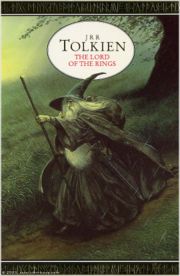
Tolkien's 'palantir seeing stones' from The Lord of the Rings.
Oh, J-double-R tells you their basic function (a magical melding of crystal balls and web cams), who created them (the elves of Valinor), and even the various sizes that they come in (anywhere from a foot tall to large enough to fill a room), but dude never bothers to explain the nuts and bolts of they work. The closest Tolkien comes to an explanation is when he has Gandalf rattle off ways in which the stones don't work. Perhaps the instruction manual for the palantir stones is among the "much that once was is lost" that Galadriel spoke of. You think?
Tip #4:
Don't even attempt to explain your I.T.D. Just act like it's a given and move the f**k on.
Back to Jack Kirby for this one. In his sprawling, unfinished, Fourth World saga, small electronic cubes called 'mother boxes' pop up at key moments in almost every characters' storyline. So how does 'The King' describe the workings of the mysterious mother box? He doesn't. The first time a mother box is introduced in The New Gods, he has a woman gasp in amazement at its wonderous, unspecified powers. From then on, Kirby only refers to its capabilities when he's adding new ones. And it works!
Tuesday, November 4, 2008
Tuesday's Tip for Flailing Writers:
A Story Idea -- Ripped From Today's Headlines!
News item, care of the AP:
Bernice King and brother Martin Luther King III again faced off in court Friday against another brother, Dexter King.
Dexter, CEO of King Inc., wants a judge to order Bernice, the administrator of her mother's estate, to turn over personal papers, including intimate letters between Coretta Scott King and Martin Luther King Jr.
The documents were part of a $1.4 million book deal with Penguin Group for a memoir about the civil rights matriarch, but that deal fell though earlier this month after the family missed a deadline from the New York-based publisher to turn the documents over. It is unclear now whether the documents can or will be used for any future such deals.
Story Idea:
Title: Little Women Bitches
Plot: Set in New England Atlanta during the Civil War fifty years after the Civil Rights Movement, the novel follows the adventures of the March sisters King siblings as they struggle to pursue their dreams the publishing rights to their deceased dad's dream.
Tuesday, October 28, 2008
Tuesday's Tip for Flailing Writers:
A Story Idea -- Ripped From Today's Headlines!
News item, care of livescience.com:
Oddly, Americans Fear Snakes More Than Disease
Diabetes affects 24 million Americans and an increasing number of children. It can lead to limb loss and heart attacks. Yet people are more afraid of snakes and flying.
In an online survey by the American Diabetes Association (ADA), conducted in August and released today, people revealed far greater fear of events that are much less likely to affect them. Percentage of respondents who fear:
* Being in a plane crash: 16 percent
* Snake bites: 13 percent
* Being hit by lightning: 5 percent
* A shark attack: 4 percent
* Getting a disease: 5 percent.
Story Idea:
Title: Snakes on a Plane...Crash!
Plot: A group of diabetic reptile wranglers are flying across the Atlantic when their jet is struck by lightning, stranding them and their snakes in the middle of shark infested waters. Carnage ensues....and a love story is awkwardly shoe-horned in...copious flashbacks are used to try and flesh out one dimensional characters...footnotes detailing unusual trivia about various marine animals are used to try and bring the book to 'proper novel length'...oh, and Sam Jackson is in there somewhere, dropping eff-bombs like autumn leaves. The end.
Tuesday, October 21, 2008
Tuesday's Tip for Flailing Writers:
A Story Idea -- Ripped From Today's Headlines!
News item, care of WAPT, Missouri:
White Women Push Suicide Rate Higher
The suicide rate in the U.S. is on the rise, according to a report from Johns Hopkins University. Researchers found that the overall rate rose 0.7 percent from 1999 to 2005. But the rate for white women ages 40 to 64 rose 3.9 percent.
Story idea:
Title: Suicide and the City
Plot: Four professional, narcissistic, middle-aged, White women jump Manolo Blahniks first into this season's crazy new fad: killing themselves. (Okay, so this one's going to need a bit of padding out if it's going to fill a mass market, but how tough could it be to script twenty-some-odd chapters of their sex, booze and shopping exploits?)
Monday, January 28, 2008
Striking Screenwriters Slum It In The Lit World
We predicted it a while ago. Hollywood's striking writers have switched from Final Draft to Microsoft Word, and the results have not been pretty. Via The Los Angeles Times:

As the writers strike drags on, there's at least one small corner of the industry that hasn't been grinding to a halt over the last months: literary departments at the major talent agencies, which are getting inundated with book proposals and story ideas for novels from out-of-work screenwriters.
"Some of our writers who have ideas but never had the time are turning to their book projects," said Jennifer Rudolph Walsh, an executive vice president of the William Morris Agency's literary department.
Still, the transition from writing action slug lines to smooth literary prose can be bumpier than a jump-cut in a Tarantino film. According to book agent Mary Evans, the fact that a screenwriter has written a manuscript has no bearing on whether his or her book will have even a modicum of writerly competence.
"Oftentimes, you shudder when a screenwriter sends you a novel, because they tend to be strong with dialogue but crappy with context, and novels are all about creating the proper context for the story," said Evans, whose clients include Smith and Michael Chabon. "Screenwriters are attracted to novel writing because they can let their freak flag fly and just write what they want, but the truly talented novelist-slash-screenwriter is very rare."
See also: Expect A Slew Of Self-Congratulatory Norma Ray Rip-Offs, Re-Makes and Unofficial Sequels In 2009
Wednesday, November 14, 2007
In Defense of Third Person Omniscient
Yesterday, a customer asked me if I could find him some recent fiction written in the third person omniscient point of view. ('T.P.O.' as I'll refer to it from here on out, is when a story is told from the perspective of a god-like narrator who can see every character's actions and thoughts.) My initial reaction was, damn, what a stupid way to find something new to read. Then I set off around the store to find one. But you know what? I couldn't. Not one. It seems that the majority of the novels being published today fall into one of two p.o.v. camps: first person ("I did this," "I went there," etc.) and third person limited (a character's name is used instead of "I", but chapter to chapter, scene to scene, we get to 'hear' the thoughts and 'see' the observations of whichever character is being featured).
So what the hell happened to T.P.O? Looking around online, the majority of folks seem to deride it, calling it "head-hopping," or "lazy writing." Another common claim is that publishers frown on it because it "creates...distance between the reader and the story," while "making it hard to form any emotional attachments to the characters."
Well, I say mother-eff those folks. T.P.O. is the Robert Altman of fiction -- a unique and exciting way to experience the lives of a wide variety of characters, all at the same time. And to call it "lazy" is ludicrous. Switching back and forth between the p.o.v. of a group of characters in a manner that never confuses...that's anything but easy. Jane Austen used to use the T.P.O., and she's no slacker. J.R.R. Tolkien did, too, and he was a literature professor. Hell, even your mother and/or father used T.P.O. when they told you bedtime stories, and that supposed 'distancing' never stopped you from peeing the bed in terror, did it?
In closing, let me pass on this quote from Molly Maquire, herself quoting Stephen Koch. The two of them sum it up perfectly:
"Whenever arguments over the sanctity of certain POV protocols arises, I think of Koch's take on the furor:
'Too often, this rather fussy doctrine pointlessly constricts writers’ options and narrows their range. As for the claim that the reader can’t follow multiple or shifting points of view, it is simply false on its face. The whole history of the novel is testimony to the contrary, from Jane Austen to Thomas Pynchon. In masterpiece after masterpiece, the narrative point of view readily changes from page to page, or even from sentence to sentence and only delights as it does so. In fact, one of prose fiction’s grandest strengths, which it exercises for once in effortless superiority over all other narrative media, including the movies, is its ability to dart in and out of any character’s mind at will. To forgo this splendid artistic advantage in the name of some pallid academic theory is really madness.'–Stephen Koch, The Modern Library Writer’s Workshop, page 90"
Wednesday, July 18, 2007
Carrie Fisher vs. Steve Martin
(an interview about writing, not acting)
Carrie Fisher and Steve Martin have a Mormon's couple of things in common. They're both well-known movie stars, both acclaimed writers of thinly veiled fiction, and both failed to respond to the fan letters I wrote to them as a child. Now, I understand Martin's reticence. Back in the late 80's he was probably getting truckloads of fan mail from boys eager to hear his thoughts on comedy writing. But, c'mon, Carrie -- how many other straight, 15 year old boys were praising you for Postcards From The Edge while purposefully neglecting to mention how hot you looked in the 'Slave Leia' outfit? Your (publicist's?) cold shoulder hurt me until I realized that it wasn't me personally that you were rejecting, but the outside world in general. I mean, the cocaine, the booze, the pills...it was the outside world in general, wasn't it?
WASN'T IT?!
I'm sorry. My therapist said that these confrontations would be healthy and helpful. So why am I shouting at you in all-caps while trying to burn your name into my arm using only the dim red laser from my cordless mouse?
Save me, Carrie Fisher. You're my only hope.
The following interview is reprinted without permission from The Los Angeles Times, July 25, 1999.
Carrie Fisher: I slept with Steve Martin once and once only, 20 some years ago. And I interviewed Steve Martin once and once only 20 some days ago. You do the math.
But what is patently true is that Mr. Martin (yes, he makes journalists like myself call him Mr. Martin) has written another funny film, "Bowfinger." Directed by Frank Oz, produced by Brian Grazer, written by Mr. Martin, and starring Eddie Murphy, Heather Graham and himself, the Universal Pictures film opens Aug. 13. It's about fly by night filmmaker Bobby Bowfinger (Mr. Martin), who tries to make a movie with paranoid action star Kit Ramsey (Murphy), who doesn't even know he's in the film, with the help of a hapless crew (whose members include Graham and Christine Baranski) and clueless stand in Jiff (also Murphy).
Steve and I spoke of how we first met (the Improv more than 25 years ago); how I did an episode of the George Burns comedy show that he directed perhaps 15 years ago, how we both have the same lawyer and how we both had been in therapy, although we weren't unhappy people. Steve told me, "I'm not unhappy, I'm not unhappy at all. I mean, we all have a dark side. Normal dark. If you didn't, you wouldn't be alive."
Steve was born in Waco, Texas, and his family moved to California when he was 4. He has an older sister. His father sold real estate in Orange County, and his mother was a housewife. His sister went north to college, got married and raised two kids. Their 87 year old mother is still living in Orange County. When Steve's father realized Steve was going to be in show business, he wrote to actor Raymond Massey, whom he'd known when he was younger.
"Like Raymond Massey would be able to help me," Steve says. "It was sweet of him, you know?"
Steve started out writing for the "The Smothers Brothers Comedy Hour," for which he won an Emmy in 1968. He continued writing for television for Glen Campbell, Sonny & Cher and Pat Paulsen's shows. He made two comedy albums, "Let's Get Small" and "A Wild and Crazy Guy," which became hits in the '70s. Then, he says, "I was on 'Saturday Night Live.' "
Though he wrote the material for his act and for those various TV shows, he did not consider that to be the sort of writing he would come to do later on. Today, he is a produced playwright ("Picasso at the Lapin Agile"), occasional essayist (largely in the New Yorker) and author ("Pure Drivel" has spent time on many bestseller lists). It is his play, however, that he credits with changing the way he approaches writing.
Carrie Fisher: You have a career unlike anybody else. I can't think of too many actors who write scripts, or I don't think anyone writes plays or writes books, too.
Steve Martin: There are a few. [Chazz] Palminteri ["A Bronx Tale"]. Ben Affleck and
CF: Oh, right those guys. How did you decide to write your play?
SM: I had a place in New York for years, and so I'd go to the theater, and I remember that I saw a play and thought it was very funny. I thought that would be a real challenge for me. So I put two and two together and said, "What am I good at? I'm good at listening to the audience and letting the audience tell me what is funny, meaning I can edit."
So after I wrote my play, I realized that's half the battle being able to stand back, listen, cut and rewrite. Then I thought I could write. I had already written some screenplays and been onstage, so I thought that was a good combination for writing a play, and I had the idea. So I started writing it.
But at the same time I was frustrated with where I was in comedy. I thought I was getting old, you know? When I performed, it felt familiar, and that's a deadly feeling to have. And it didn't feel funny like it's supposed to feel. I can remember when I was doing stand up, I thought . . . "I feel funny. I'm not necessarily saying anything funny, but I feel funny." And I had that feeling in movies for a while too.
But there was something happening. "I'm going to change something," I thought. "Maybe I'll have a salon, you know, and we'll talk about comedy!" Stupid idea, but I was thinking those kinds of thoughts because something had to change. Looking back, I realized I was already doing the things that changed my life, like writing my play; that was the thing that was going to change my life.
CF: I think people know you best as the actor, unaware of your talent and fondness for writing. What is it about writing for you?
SM: With writing, you purge something out of yourself. You tell a story that you've been carrying around in your head, and you know the story.
CF: All writing is cathartic.
SM: Yeah, I'm sure.
CF: Don't you think? It's very cathartic for me when I can write about whatever's happened. I'm a warhorse; if I have a situation that's bad, I can handle it. But I can handle it best when I joke about it. That's my writing. When you take a story in hand and it becomes yours, no matter whether you're telling something for true or you're telling another sort of story you're the narrator. There's something that becomes very clean about your voice. Did you find that with writing this movie?
SM: Yeah, but as you know, books and screenplays are different. With books, you're writing what's the truth, unlike screenplays, where a lot of times you're writing what you think will work. When I wrote my play and my book, I thought, "That's the feeling I want to have when I write. Why can't I have that feeling when I write a scene?"
CF: Writing my book ["Postcards From the Edge"] changed my life completely. But you had more control to begin with; you had a comedy act.
SM: Yeah, I did have more control, but control wasn't the point. It was like what I was writing was different.
CF: And what you're proud of takes on more weight. Now you've written this hilarious movie, "Bowfinger." There's a joyful playfulness in it. It's such a funny idea that's executed really well.
SM: Well, I find that when you have an idea you have to stop yourself and think ahead and go, "Are there scenes? Are there scenes to be written that are going to be funny or is it just like that and there's nothing going to happen?"
SM: Uh huh. I've had several people tell me that plotting is, "Oh, that's just work." They [write] the fun creative part, the dialogue on it, then they go to the plot, it's just work. They have to work at it.
CF: But I think the whole thing is called work.
SM: Yeah. But sometimes it's not work.
CF: And sometimes it really is, but every so often when it's a pleasure is why you do the work. How do you feel about the film now?
SM: Well, I'm proud of it, and it was a struggle. You know, it's show business. I've had this experience, like, three or four times in my life where there's such a high, and an hour later it would be so low. Your hopes and dreams ride on a movie, and I'm not just talking about box office. I'm talking about audience. One bad screening and you're just killed.
Early on, we had a very bad screening. The problem was they forgot to throw the Dolby switch, so you could only pick up, like, every third word. It was a nightmare, I wanted to kill myself because I knew it wasn't the film, it was the Dolby switch. Then a part of me is going, "I hate myself, why did I ever do this?"
Then we had the problem fixed, and it was, like, a miracle. An extreme response, a big change.
You know, I wanted a movie that would play well in Europe. Very physical comedy. And the biggest challenge in physical comedy, most importantly, is not to become too stupid, but for it to be clever, because otherwise you're just falling down. I was talking to Frank Oz about this. He said, "We can't just have the ladder whack somebody. We've got to have the ladder whack somebody because of X, Y and Z having been set up, and it's inevitable the ladder is whacking us."
CF: How did you get the idea?
SM: It's hard for me to remember. But I've had it for a long time I'd say over 15 years.
CF: Wow.
SM: Well, I had the story but not the ending. I was going to write another story and mesh the two together. The other story was about this big Hollywood producer who finds out he has two months to live.
CF: So there were two ideas?
SM: Yes, two ideas that I meshed together. The second idea was about this huge Hollywood producer who goes to his window and says to himself, "I've had a great life, a great career, and when I'm gone the other producers will go on, and they're my friends and they'll make movies," and then he pauses and thinks: Why should he be the only one to die? So he decides to throw a party and invite everyone in Hollywood and blow up his house.
CF: (Laughing.) Nice. I see.
So everyone is dead, and you know, Kit Ramsey [the action star played by Murphy] wins the Oscar for his best performance ever. But I really didn't like that ending because I thought it was too much of a black comedy, and I wanted it to be more of a big, funny physical comedy. So then I realized that I had to cut out the one story of the party and make the initial story more simple. Otherwise, there were just too many things going on.
And I can do the other movie sometime, you know. Something was keeping me from writing when the two stories were together, and then I realized I had to eliminate the second story to make it work.
CF: And then how long did it take you to finish?
SM: Well, the original first draft, probably two months. But you know, I always write first drafts very sketchily. I'm an anxious writer. And I don't like to outline a story because I don't want to know where I'm going.
CF: Really? So you follow the character then.
SM: Follow the characters and also have a general idea, but the best ideas are the ones that come up while you're writing it.
CF: So then you finished the draft and what happened?
SM: Well, so I have the draft, and I'm all nervous about it and everything. I can't remember if I sent it to a friend or not I probably did. And then I called [producer] Brian Grazer. I told him I had this script I wrote, and I'm nervous about calling him because I don't want to put him in a spot because he's a friend. But I also felt lousy about offering it to someone else, and then it turns out he wanted it. So I gave it to him and he read the script, and said he really liked it and wanted to do it. And I said, "Well, there's a few ways to do this movie. Low budget, high budget or normal budget." They thought about it for a couple days and came back and said they wanted to do it high budget! (Laughs.)
CF: Meaning Eddie Murphy and everything.
SM: I guess so, that and Frank Oz directing. But remember, I didn't write the movie with Eddie Murphy in mind; it was Brian's idea to give the role to Eddie. He asked if I would be interested in Eddie Murphy, and I was, of course. I had to rewrite a whole character arc with Eddie in mind.
CF: So did you have a great time working with him?
SM: Yeah, I had as good of a time as you would with someone you know is better than you. So many times, Eddie would do something, and as a writer, I would be saying . . . , "Thank you, thank you." As the writer, I'm going, "Thanks for making that scene work."
CF: Besides playing Kit Ramsey, Murphy plays Jiff, a nerdy guy. Who came up with the idea to have him wear braces on his teeth?
SM: Eddie.
CF: What about editing, how involved did you get?
SM: Well, Frank is extremely open and generous, but I'm not in the editing room or anything. I attended screenings and would give notes. I am proud of it, I really am. No matter what, I know I've listened to the audience. I double over in laughter at certain moments in the film, and I watched the heads in the audience go up and down with laughter. It's just the greatest feeling in the world.
SM: Um, well, I don't know about that, because I have affection for "Roxanne" and "L.A. Story."
CF: I know. Those are great.
SM: And "The Jerk" too, you know.
CF: And this is just
SM: This to me is the movie I was supposed to make.
CF: You know, in person, you're not a real extrovert.
SM: No. No. But I can be funny. People think I'm not, but I can be.
CF: I know you're funny. I mean, I communicate with you as though you are, and I don't do that with everybody. But you don't work hard at it. Danny Aykroyd also had that. That's why you guys do characters so well, both of you.
SM: I'm not really a character guy.
CF: He really is.
SM: Danny is brilliant.
CF:. But in all the time I've known you
SM: I don't do characters, is that what you're going to say? Or
CF: You don't do shtick, you know, like Robin [Williams] or even Albert [Brooks] does in his anxiety. I guess it's kind of an anxiety thing. How do you describe your psychology then? That's where I think a lot of comedy comes out of.
SM: Well, I just call it "walk speed."
CF: Who do you admire, then, of writers, novelists and stuff?
SM: Well, start with my business and I definitely admire Woody Allen.
CF: What prose do you like?
SM: Martin Amis. I love him. Have you ever read Martin Amis?
CF: I've read one. I've read it because through friends I had dinner with him and he was pumping me for information on lithium, which I don't know a lot about, but he's putting a character in a book that overdosed on lithium.
CF: Do you have panic attacks?
SM: Yeah, yeah . . .
CF: I've had two.
SM: I used to have them. It's horrible. And by the way, it started when I was 21. It was fear, the same reaction you get if you were faced with a lion, only there's no lion. It is something inside of you that you are afraid of. Then I started thinking, "Well, what is that?" Then I figured it out.
CF: What?
SM: Well, at the time I was 21, I was writing for a network television show and I really didn't know how to write.
CF: Do you ever? I mean, do you know you have more experience in doing? The best time I had writing was when I didn't know how to write. I didn't have a deadline, though.
SM: Yeah, but I was on network television. It's a whole different thing. It's like, if I blow this . . .
CF: That's your whole paycheck.
SM: It's your whole life. And then it started to subside.
CF: So are you trying to write more stuff or are you just going to
SM: Take a break. I'm pushing myself in that direction.
CF: Do you think you'll write another book?
CF: Yeah, I know, I read the last one in rehab.
My daughter came in at this point with the intention of abducting me back into my life. It was then that Steve did these amazing card tricks. Billie was very impressed. A guy who'll write a funny movie well, more than one and then to have that same guy do card tricks for your 7 year old well, you gotta love a guy like that.
By the way, this interview will be the last in the series I did in my upcoming book, titled "Famous Men I Have Slept With So I Could Interview Them Later," due out in the fall for Simon & Schuster.
Saturday, July 14, 2007
What Makes Sammy Stall?

Monday, July 9, 2007
Jazz Messenger by Haruki Murakami
I never had any intention of becoming a novelist — at least not until I turned 29. This is absolutely true.
I read a lot from the time I was a little kid, and I got so deeply into the worlds of the novels I was reading that it would be a lie if I said I never felt like writing anything. But I never believed I had the talent to write fiction. In my teens I loved writers like Dostoyevsky, Kafka and Balzac, but I never imagined I could write anything that would measure up to the works they left us. And so, at an early age, I simply gave up any hope of writing fiction. I would continue to read books as a hobby, I decided, and look elsewhere for a way to make a living.
The professional area I settled on was music. I worked hard, saved my money, borrowed a lot from friends and relatives, and shortly after leaving the university I opened a little jazz club in Tokyo. We served coffee in the daytime and drinks at night. We also served a few simple dishes. We had records playing constantly, and young musicians performing live jazz on weekends. I kept this up for seven years. Why? For one simple reason: It enabled me to listen to jazz from morning to night.
I had my first encounter with jazz in 1964 when I was 15. Art Blakey and the Jazz Messengers performed in Kobe in January that year, and I got a ticket for a birthday present. This was the first time I really listened to jazz, and it bowled me over. I was thunderstruck. The band was just great: Wayne Shorter on tenor sax, Freddie Hubbard on trumpet, Curtis Fuller on trombone and Art Blakey in the lead with his solid, imaginative drumming. I think it was one of the strongest units in jazz history. I had never heard such amazing music, and I was hooked.
A year ago in Boston I had dinner with the Panamanian jazz pianist Danilo Pérez, and when I told him this story, he pulled out his cellphone and asked me, “Would you like to talk to Wayne, Haruki?” “Of course,” I said, practically at a loss for words. He called Wayne Shorter in Florida and handed me the phone. Basically what I said to him was that I had never heard such amazing music before or since. Life is so strange, you never know what’s going to happen. Here I was, 42 years later, writing novels, living in Boston and talking to Wayne Shorter on a cellphone. I never could have imagined it.
When I turned 29, all of a sudden out of nowhere I got this feeling that I wanted to write a novel — that I could do it. I couldn’t write anything that measured up to Dostoyevsky or Balzac, of course, but I told myself it didn’t matter. I didn’t have to become a literary giant. Still, I had no idea how to go about writing a novel or what to write about. I had absolutely no experience, after all, and no ready-made style at my disposal. I didn’t know anyone who could teach me how to do it, or even friends I could talk with about literature. My only thought at that point was how wonderful it would be if I could write like playing an instrument.
I had practiced the piano as a kid, and I could read enough music to pick out a simple melody, but I didn’t have the kind of technique it takes to become a professional musician. Inside my head, though, I did often feel as though something like my own music was swirling around in a rich, strong surge. I wondered if it might be possible for me to transfer that music into writing. That was how my style got started.
Whether in music or in fiction, the most basic thing is rhythm. Your style needs to have good, natural, steady rhythm, or people won’t keep reading your work. I learned the importance of rhythm from music — and mainly from jazz. Next comes melody — which, in literature, means the appropriate arrangement of the words to match the rhythm. If the way the words fit the rhythm is smooth and beautiful, you can’t ask for anything more. Next is harmony — the internal mental sounds that support the words. Then comes the part I like best: free improvisation. Through some special channel, the story comes welling out freely from inside. All I have to do is get into the flow. Finally comes what may be the most important thing: that high you experience upon completing a work — upon ending your “performance” and feeling you have succeeded in reaching a place that is new and meaningful. And if all goes well, you get to share that sense of elevation with your readers (your audience). That is a marvelous culmination that can be achieved in no other way.
Practically everything I know about writing, then, I learned from music. It may sound paradoxical to say so, but if I had not been so obsessed with music, I might not have become a novelist. Even now, almost 30 years later, I continue to learn a great deal about writing from good music. My style is as deeply influenced by Charlie Parker’s repeated freewheeling riffs, say, as by F. Scott Fitzgerald’s elegantly flowing prose. And I still take the quality of continual self-renewal in Miles Davis’s music as a literary model.
One of my all-time favorite jazz pianists is Thelonious Monk. Once, when someone asked him how he managed to get a certain special sound out of the piano, Monk pointed to the keyboard and said: “It can’t be any new note. When you look at the keyboard, all the notes are there already. But if you mean a note enough, it will sound different. You got to pick the notes you really mean!”
I often recall these words when I am writing, and I think to myself, “It’s true. There aren’t any new words. Our job is to give new meanings and special overtones to absolutely ordinary words.” I find the thought reassuring. It means that vast, unknown stretches still lie before us, fertile territories just waiting for us to cultivate them.
The preceding was stolen whole from the pages of the New York Times, July 8, 2007.

Wednesday, June 13, 2007
Inappropriate Flair
1. Less is more. Like loud fabrics, loud literary devices are hard to mix and match. If you’re going to narrate in stream-of-consciousness, do not also use screenplay-style stage directions and scene breaks. Pick the device that means the most to you. Once you’ve chosen your gimmick, don’t overdo it. Think of that guy you saw last weekend wearing all hot pink plaid. Did you say, “Wow, I admire his consistency to his theme”?
2. Make sure someone gets it. Kurt Vonnegut recommended writing with an audience of one in mind. Whoever you’re writing for, test it out. If your audience doesn’t like your device, you may want to consider toning it down. Even if you’re not thinking of a specific person as you compose, a suitably sympathetic, unbiased reader ought to be able to get through the device without trouble. I’m thinking your editor here.
3. Most important, make sure it’s crucial and authentic to the work, not just something you’re doing to show off. Christopher Bachelder’s Bear v. Shark uses stream-of-consciousness narration with two-page chapters and commercial breaks as its main style—a highly disruptive format. But the book is a satire about a near future in which television screens have taken over all four walls of the room and no longer turn off, where advertising invades our thoughts and the attention span is a thing of the past. The method is the message—so Bachelder’s outré style doesn’t distract from his point. (Also, the book is short—the author doesn’t expect us to get through three hundred pages of this bizarre prose.) If your device isn’t integral to your work, you’re probably better off without it.
To read the whole kit-n-kaboodle, click here.Wednesday, May 30, 2007
Choosing the Correct Gang Color for your Writers' Group (and other tips)
Before Inkwell Michelle would let me post on her blog, she, um...strongly suggested...that I join a writers' group in an effort to make my spellin's more better. As a staunch advocate of Groucho Marx's old axiom about 'not wanting to be a part of any group that would have me as a member,' it was, needless to say, the first time I'd ever attended such a soiree. So's not to appear unprepared, I brought an old Smith Corona typewriter, some cigarettes, a green tinted visor and some cheap whiskey. Oh, and a story I'd written the night before about a psycho that joins a writers' group only to then kill each writer one by one in a manner reminiscent of the stories they'd read there (its title: Deadly Dull). Imagine my surprise when the group turned out to hate my ideas, the smoke from my smokes and the fact that the whiskey made me physically sick. It's not like their stories were much better. The young guys were all writing variations of Fight Club, only with more video game references, and the girls were all trying to blend their favorite episodes of Sex & The City with their one unsuccessful suicide attempt from their teens. Only the old people's stories were interesting. I had no idea that they were all so dirty-minded (or was I mentally making unintended metaphors of all of their innocent flowering garden and railroad worker short stories?).
Anyway, the point of today's post is to highlight a few websites that offer suggestions on how to better start and/or run a writers' group. There's another old axiom I'd like to toss out, the one that claims 'you can choose your friends, but not your family.' When running a writers' group, no such excuses are accepted. You are responsible for every choice made: the members, the setting, the style of critique offered, the way the discussion flows, etc, etc, etc. If this is the sort of thankless, profitless power you crave, then explore the links below:
The 6' Ferrets Writers' Group -- A good place to visit for anyone starting from scratch. They've broken their site down into bite sized portions: Starting A Group, Writing Exercises, Special Events and Suggested Reading.
Man Bytes Hollywood -- This guy has been running a writers' group for a while, and boils down the secrets to making it successful into three seemingly obvious, but clearly hard won tips.
Argh Ink -- The woman that runs this site had been a part of many disappointing writers' groups before finally starting her own. She opens her piece by discussing the pitfalls that many groups fall into (discussing anything and everything besides writing -- publishing, in particular) before outlining quite a long list of ideas for keeping your group on track without garnering resentment and/or villains crafted in your likeness.

Tuesday, May 8, 2007
As A Writer, You Really Ought To Be Writing, But As Long As You're Reading, You Might As Well Be Reading Something That Relates To Writing, Right?
Today's links are dedicated to the struggling writers. May the published among us die so that the unpublished might find agents.
Subscribe to:
Posts (Atom)

