Wednesday, August 15, 2007

News Bits, In Brief

Punishing Your Kids -- From the Cradle to the Grave!
Newsday.com heaps more fuel on the anti-geek fire by promoting Sci-Fi Baby Names, a book advertising "500 Out-of-this-World Baby Names from Anakin to Zardoz," with explanations as to each one's origin, character, and a trademark quote.
Prospective parents of the Comicon crowd, as a fellow cosplay fetishist, I beseech you: Unless you're planning on giving your kid double their required amount of lunch money every day until they graduate, and are then willing to shell out good money for a mail order bride/groom/lovedoll, do not name your children after sci-fi characters. It's not only cruel, it's impractical. Do you know how hard it's going to be to find monogrammed paraphernalia that features the name Zardoz?

Killer Lineup of Upcoming Book Releases
According to E! Online, "a literary agent working on behalf of Ron Goldman's family said Monday that she has found a publisher for O.J. Simpson's once scuttled hypothetical memoir, If I Did It, which contains passages describing how the ex-NFL star would have gone about killing Goldman and his ex-wife Nicole Brown Simpson, if he had been the one
to commit the double murder."

In semi-related-depending-on-how-you-vote news, The Washington Post reports some secondhand information overheard at a hunting lodge: Karl Rove plans to write books after he leaves the White House 18 months from now.

Them Vs. Them
Via Publisher's Weekly: The NBCC announced today that it is launching a new project tied to its blog, Critical Mass. Critics will take turns blogging about NBCC Award winners and finalists, with the goal of reintroducing readers to the hundreds of authors who have been nominated for or won the literary prize. Some of the pairings include Charles Baxter on William T. Vollmann, David Orr on Elizabeth Bishop, Lev Grossman on Richard Hofstader, and Joshua Ferris on Don DeLillo. The focus of each post will be a discussion of a winning book or nominee. Other posts will feature review roundups, reminiscences of award winners by friends and former students, group discussions, and excerpts from books. The first post appears today.

A Glimpse Into the Advertising of 2037: Expect Thom Yorke Flying Virgin America and Eric Schlosser Eating Big Macs

 Images 15749


Today's last news bit is a sad lament care of David Pescovitz over at BoingBoing:
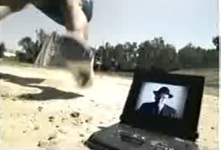
"Two of my patron saints as pitchmen. At left, Timothy Leary's 1993 print ad for The Gap. A copy is currently up for auction on eBay. At right, a still from the William S. Burroughs TV commercial for Nike from 1994. View the blipvert on YouTube."

Tuesday, August 14, 2007

New & Notable: Art Books


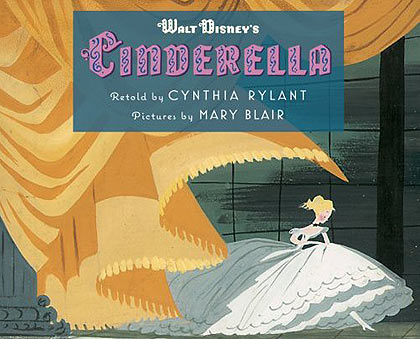
Via Cartoon Brew: A new Cinderella storybook that uses Mary Blair’s concept art from the Disney film will be released August 28th. If you're not yet familiar with Blair's deceptively simple work with pastels and paints (as well as scraps of cellophane and fabric), click here and be wowed.

Police guitarist Andy Summers' book of photography, I'll Be Watching You: Inside the Police 1980-83, washes up on our shores August 26th. To view the first 24 pages, click here.


Pharaoh's Daughter by Alisa Golden at Donna Seager Gallery


Alisa Golden's Expressive Handmade Books would seem to be the sort of fetishistic read that book lovers would salivate over. And unlike the other books mentioned, this one is already out.

Monday, August 13, 2007

Pulling Away the Curtain to Reveal the Little Man Behind the Movie Screen

Honest, uncensored accounts of the movie making process are rare. Ones marketed as non-fiction are rarer still. Since Tinseltown's formation some 100 years ago, there have only been a handful of instances where journalists have been allowed unfettered access to every aspect of a film's production (from the creation of the script through the first few weeks following its release; where they were allowed to travel among the cast and crew, taking notes as well as names while documenting the egos, the insecurities, the heartbreaks, the stupidity, the well-meaning disasters and the kaleidoscopic shifting of false blame and unearned claims of credit being made). Among these, two reign supreme: Picture, by Lillian Ross, and The Devil's Candy by Julie Salamon. Reprinted below are reviews of both, written by two of the Hollywood's own -- one a well-known screenwriter and novelist, the other an uncredited scribe for Entertainment Weekly magazine.

November 23, 1952
What Makes Hollywood Run?
By Budd Schulberg

Picture
By Lillian Ross.

Miss Ross has anatomized Hollywood," S. N. Behrman has said of "Picture," describing it as "the first blow-by-blow account of what really goes on" and "the funniest tragedy I have ever read."

It is a book with many morals. Perhaps the first and most obvious is that, if you value your privacy, if you do not want to be caught with your clichés down or your pretensions showing, Miss Ross is not the lady to ask into your home. She has explored Hollywood with a camera eye and a microphonic ear. The result is "Picture," which is hardly the "impartial" and "tactful" treatment of Hollywood Miss Ross' publishers claim. (The quality of Miss Ross' impartiality and tact already are well known to The New Yorker's readers of her gentle profile of Ernest Hemingway in 1950.)

I find myself reviewing "Picture" in double vision because in a sense I have already reviewed it: when it appeared in a number (too large a number, it seemed to me then) of New Yorker installments, I reviewed it for my wife and children and friends and anybody else within earshot. Maybe it was what David O. Selnick once described as my "producer's blood" that reacted, but whatever the nature of that fluid it was boiling all the same. I knew it was not good for my soul to fall in with the Hollywood powers, but I found myself echoing their cries of anguish and protest. (In Hollywood a certain trade journalist, with the tolerance for which he is known, closed his column with: "I leave you with two dirty words--Lillian Ross.")

Now that I have read the articles in book form, I find myself wondering whether Hollywood hasn't once more gone off the deep end, an acrobatic feat my home town has perfected through years of practice.

For "Picture" presents Hollywood's more heroic attitudes as well as its more foolish and familiar ones. Never blind to Hollywood's persistent creative effort, it is sharply observant of the business mechanism that blunts the points of some of the industry's sharper talents. It plays back with an unfailing ear some of the wise things that are said in that keyed-up, pent-up industrial town, as well as the wise-cracking, the bathetic and banal.

It was either a lucky or an ingenuous choice that led Miss Ross to "The Red Badge of Courage" as the picture to follow step-by-step from the first ritualistic rumors of High Priestesses Parsons and Hopper to the New York reviews and the box-office returns two years later. The "Red Badge" was the ideal hook on which to hang a study of the classic conflict between serious artistic effort (well, fairly serious and the cold, economic logic of box-office, stockholders and the hierarchy of Loew's, Inc. John Ford knew this conflict when he took a risk with "The Informer" and "The Long Voyage Home," and did his obeisance with "Wee Willie Winkie" and "What Price Glory." For years King Vidor balanced such artistic successes but commercial flops such as "The Crowd" and "Our Daily Bread" with less ambitious box-office winners. Hollywood is not always a Garden of Eden where writers and directors sit by their pools and dream of bigger salaries and bigger pools. A surprising, and largely frustrated, number of them dream of better pictures. For all their insecurity, their compromising, their posturing, these choose--occasionally--to face into the riptide of public opinion and high finance.

John Huston, the director of "Red Badge," and Gottfried Reinhardt, his producer, may remind you of Don Quixote and Sancho Panza in modern dress, this time in Hollywood slacks and English tweeds. They are ludicrous, devoted, ingenious, ennobled, funny when they are being serious and somehow impressive even when Miss Ross catches them (and oh how she loves to catch them!) saying "I always wanted to direct a picture on horseback," or "The titles are just marvelous. . . . Piccolos under your name, strings under mine. You will go out of your mind."

Quotations. Like Durante, Miss Ross has a million of 'em. Only Jimmy is more human. Just the same, Miss Ross makes good her threat to learn something about the American motion picture industry. And her eavesdropping with a vengeance begins to take on the meaning and unity of a novel. Dore Schary, the new tycoon who is for the picture, wins out over L. B. Mayer, the erstwhile or last tycoon who does everything in his power (which is legendary until he is eased out of the studio he founded) to keep the "Red Badge" from being made. "You don't want to make money, you want to be an artist," Mayer accuses Reinhardt. Mayer, like his satellite Arthur Freed, believes in clean, cheerful, romantic, American entertainment. Schary does too, of course, but he's willing to take more chances on off-beat stuff like Huston's and Reinhardt's "Red Badge." Schary stands by the picture in his fashion, trimming it, simplifying it and removing some of the scenes that made teenagers laugh and that Huston and Reinhardt had considered their best.

When it's all over, the picture gets respectful reviews, but not what Huston and Reinhardt had hoped for when they first shared a dream of "a great artistic picture that would also make money." "Red Badge" opens in New York in a small theater to poor business. The Academy Award for that year is won by "An American in Paris," produced by Arthur Freed, the man more interested in making money than making art. And who has the last word? Miss Ross has chosen her Greek Chorus shrewdly. Not John Huston nor Gottfried nor Dore Schary nor even L. B. Mayer sits in final judgment. It is Nick Schenck, who runs M.G.M. from his office in New York as head of Loew's, Inc.

"Now, three thousand miles from Hollywood * * * I began to feel I was getting closer than I ever had before to the heart of the matter," writes Miss Ross. "I felt that somewhere in the offices upstairs I might find the few decisive pieces that are missing."

So finally, upstairs she finds Schenck. And this Caliph of Caliphs says, "I supported Dore. I let him make the picture. I knew that the best way to help him was to let him make a mistake. Now he will know better. A young man has to learn by making mistakes. I don't think he'll want to make a picture like that again."

Nick Schenck is wrong, of course. For all his wisdom, there is a restless, stubborn creative streak in a John Huston, in a Gottfried Reinhardt, even in a Dore Schary brought-to-heel, that will make him say again what Huston says to Lillian Ross as this book opens: "They don't want me to make this picture. And I want to make this picture."


Play Dough
Entertainment Weekly Magazine (writer uncredited...how Hollywood!)

The Devil's Candy: The Bonfire Of The Vanities Goes To Hollywood
By Julie Salamon

Some books arrive with a buzz. The Devil's Candy, Julie Salamon's exquisitely detailed account of the making of the movie The Bonfire of the Vanities, is such a book. Weeks before it landed in stores, le tout Hollywood had already read it and was talking about it. Bernard Weinraub, the New York Times' new entertainment reporter, had plugged it with abandon. Variety, knowing where its bread is buttered, had taken a preemptive swipe at it. In Hollywood, what everyone seems to be asking is: Why did director Brian De Palma allow someone like Salamon-a bona fide journalist from The Wall Street Journal, not some easily controlled hack-to roam free on his movie set? How could he have been so stupid? We non-Hollywood types, however, are likely to have a different reaction-one of gratitude to De Palma, who, as Salamon puts it in her acknowledgments, ''opened the door, without condition, and then never flinched.'' The question of why good people make bad movies has never been answered more persuasively than in this book. It's a question worth asking because, as a general rule, movies have become increasingly banal as they've become more expensive to make. Bonfire cost more than $40 million, and with so much on the line, the instinct is to play it safe. Bad decisions are the inevitable result. Hence, the role of the judge-a Jew in Tom Wolfe's best-selling novel- is given to Morgan Freeman because, according to studio executives, a black actor could offer some ''likability, empathy, racial balance.'' Bruce Willis is cast not because he fits the role of down-and-out journalist Peter Fallow but because he is a movie star and might draw teenagers to the theaters. On and on the list goes. At one point, Warner Bros. president Terry Semel becomes so agitated by the spiraling costs that he demands that De Palma pay any cost overruns for a scene budgeted at $75,000. De Palma promises to bring it in on budget. Semel's is an act of sheer panic, and it makes you realize why Hollywood's creative community is so contemptuous of ''the suits.''

Not that Salamon participates in this contempt. That's part of what makes her book so good; she lends a sympathetic ear as these smart, likable people explain why they did what they did. She also captures something about the context in which movies are made these days. Throughout the filming, controversies erupted, rumors leaked out about trouble on the set, costs soared. All of this backdrop seeped into the public consciousness, so that by the time the movie was released, its notoriety overshadowed the actual images on the screen. Critically and financially, The Bonfire of the Vanities was a bomb, but it's hardly the worst movie ever made, and what stunned the people who made it was not that it failed at the box office but that it was released to such vitriol. They hadn't heard the tom-toms beating in the background. But Salamon heard them, and so did we. That's one of the reasons we stayed away from the movie in droves. In American culture today, movies also arrive with a buzz.

Friday, August 10, 2007

In It For The Money

800-CEO-Read is a website aimed at corporate fat cats who, when not enslaving underage workers and exploiting natural resources, love to read. While I can in no way recommend their online sales service ( as it surely pales in comparison to ours...at least I hope it does), I do give the thumbs-up to their daily blog. On it, they not only provide their own reviews of the latest business-oriented literature, they also showcase lengthy book excerpts, offer pithy quotes, and best of all, make lists!
This past Wednesday, Todd Sattersten, CEO of the CEO website, posted a reading list for executives that he 'guarantees will help you be more productive and make smarter decisions.'
I'm going to give you the titles, but for the reasons as to why each one was chosen, you're going to have to click here.

1. Competitive Strategy by Michael Porter
2. Execution by Larry Bossidy, Ram Charan, and Charles Burck
3. In Search of Excellence by Tom Peters and Bob Waterman
4. Good to Great by Jim Collins
5. The Effective Executive by Peter Drucker

Wait a minute. Where's The Winner Within by Pat Riley and The Art of War by Sun Tzu? I could've sworn that Def Jam/Rockafella Records CEO, Jay-Z, has said that they're the hustler's handbooks.

Thursday, August 9, 2007

News Bits, In Brief

Harry Potter may not make lifelong readers out of children, but it's responsible for at least one enterprising child's life of crime. This past week, French police arrested a 16 year old boy who had been posting his own translation of Harry Potter and the Deathly Hallows online. While the rest of the free world has spent the past two weeks shaking their heads at the anti-climactic way Rowling chose to end the series, the book's French publisher, Gallimard, will not be releasing the book until October 26th.

The Sydney Morning Herald tempts a slap across the face from Mr. Darcy's frilly glove when it dares to ask, Where's the Sex in Jane Austen's Sensibilities? My initial response was a dismissive, 'What do you expect? She was British.' But then, so are the subjects of our next News Bit...

Via Boing Boing: Alan Moore and Melinda Gebbie discuss their erotic comic, Lost Girls, over at SexTV. (Don't say we didn't warn you: this video contains sexually explicit material. It may not be appropriate for children, Jane Austen fanatics.)

Wednesday, August 8, 2007

News Bits, In Brief

Starbucks Strikes Back: 'You Sell Coffee In Your Bookstores, We'll Sell Books In Our Coffee Shops'

Concerned that caffeine is no longer providing enough of a pick-me-up for their clientèle, Starbucks is making the next selection in their book program a collection of 50 inspirational stories. Listening Is An Act of Love, along with its accompanying CD, will be sold in US Starbucks locations beginning on November 8, 2007.
While bookstores the world over lament this newest corporate competitor, what the hell were they expecting? If we had all just stuck to books and left the coffee and pastries to the coffee and pastry people, maybe none of this would be happening.


Big Deal Means Big Dollars For Big Eyed Comics Characters

The William Morris Agency has signed Tokyopop to represent the publisher's original intellectual property for film, television, digital, merchandising, and game development. Stu Levy, Tokyopop's CEO and Chief Creative Officer says, "We are excited to join forces with WMA as we further develop the Tokyopop brand worldwide. This partnership takes us one step closer to realizing our dream of merging the leading edge of manga entertainment with Hollywood."
Well, just so long as they don't make a movie of that awful Courtney Love comic book.


Tired Of Their Good Reputation & Critical Accolades, Penguin Asks Rock Stars To Design Their Book Covers

The results are, quite predictably, horrid. The Guardian UK has the details.

Tuesday, August 7, 2007

The Murder That Refused To Die

What a year! First OJ announces that he's written a book 'imagining' his wife's murder, titled If I Did It. Then, following a huge media frenzy and a medium-sized public outcry, the book gets cancelled. (Quick question: Does anyone know if Simpson got to keep the $3.5 million advance?) Immediately after this is reported to the press, the Goldman family -- kin to the male murder victim, and one of the loudest voices calling for the book's cancellation -- files suit, asking for the publishing rights. Fast forward eight nail-biting months to last week, when the courts ruled in favor of the Goldmans' claim. As if on cue, the Juice re-appeared, saying that his 'hypothetical account of killing his ex-wife' was actually invented by a ghost writer and 'filled with errors that he refused to correct for fear of appearing to be guilty of the crime.' Okay, so even if that is true, why would OJ choose to come clean about it now? In hopes of killing sales (pun intended) when the book finally does hit stores. After all, who wants to pay hardcover pricing on a fake murder confession?! But that's not the end of the story. No, not nearly. This past Monday, the book's ghost writer, Pablo Fenjves, stepped forward for his fifteen minutes. This is his statement: "The whole book, the whole idea for a book, originated with O.J. Simpson and a couple of his handlers."
One can only wonder how Simpson will respond to this false allegation and obvious attempt to besmirch his good name. Murder, perhaps? Or worse -- another book.

Monday, August 6, 2007

Author Du Jour: Chester Himes

Biography
(courtesy of wikipedia.com)

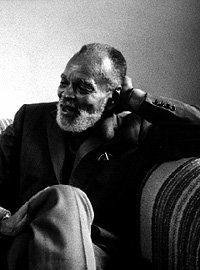
Chester Himes was born in Jefferson City, Missouri on July 29, 1909. He grew up in a middle-class home in Missouri and in Ohio (and) attended East High School in Cleveland Ohio. While he was a freshman at Ohio State University in Columbus Ohio, he was expelled for a prank. Years later, he entered prison for armed robbery. In prison, he wrote short stories and had them published in national magazines. Himes stated that writing and publishing was a way to earn respect from guards and fellow inmates, as well as avoid violence.

By the 1950s Himes had decided to settle in France permanently, a country he liked in part due to his critical popularity there. In Paris Himes was the contemporary of the political cartoonist, Oliver Harrington, and fellow writers, Richard Wright and James Baldwin.

Some regard Chester Himes as the literary equal of Dashiell Hammett and Raymond Chandler. Ishmael Reed says "[Himes] taught me the difference between a black detective and Sherlock Homes" and it would be more than 30 years until another Black mystery writer, Walter Mosley and his Easy Rawlins and Mouse series, had even a similar effect.

Works
(again, wikipedia.com)

Himes's novels encompassed many genres including the crime novel/mystery and political polemics, exploring racism in the United States. He wrote about African Americans in general, especially in two books that are concerned with labor relations and African American workplace issues. If He Hollers Let Him Go — contains many autobiographical elements—is about a black shipyard worker in Los Angeles during World War II struggling against racism as well as his own violent reactions to racism. Lonely Crusade is a longer work that examines some of the same issues. Cast the First Stone is based on Himes's experiences in prison. It was Himes's first novel but was not published until about 10 years after it was written. One reason may have been Himes' unusually candid treatment — for that time — of a homosexual relationship.

Himes also wrote a series of Harlem Detective novels featuring Coffin Ed Johnson and Gravedigger Jones, New York City police detectives in Harlem. The novels feature a mordant emotional timbre and a fatalistic approach to street situations. Funeral homes are often part of the story, and funeral director H. Exodus Clay is a recurring character in these books. The titles of the series include A Rage In Harlem, The Real Cool Killers, The Crazy Kill, All Shot Up, The Big Gold Dream, The Heat's On, Cotton Comes to Harlem, and Blind Man With A Pistol; all written in the period 1957-1969.

Cotton Comes to Harlem was made into a movie in 1970, which was set in that time period, rather than the earlier period of the original book. A sequel, Come Back, Charleston Blue was released in 1972. And For Love of Imabelle was made into a film under the title A Rage in Harlem in 1991.

My Personal Favorites
(care of me)

If He Hollers Let Him Go
I normally hate dream sequences, so I wasn't thrilled to see that every chapter in this book started with one. Funny thing is, they work wonderfully here. Instead of surreal space filler, the dreams act as a glimpse into the main character's mind, foreshadowing each progressively worsening day at his job at the south central L.A. shipyards.

Cast The First Stone
This book probably would've been a million seller had it taken place in a foxhole instead of 'the hole.' A prison novel that chronicles the minutia of life behind bars from the first day to the last, Cast's real strength lies in its uncensored examination of the complicated relationships formed by men living in prison.

News Bits, In Brief

This year, U.S. revenue for self-help books will exceed $600 million. While their effectiveness is debatable, publishers, at least, are feeling great.

Audio books are destroying book clubs everywhere! The latest divide among book lovers is not about what they are reading, but if they are reading at all.

This weekend saw a new push in the media for e-books. The 'library in your pocket' pitch was used for the umpteenth time, as well as a new 'save money and trees' angle aimed at politically minded, shallow pocketed college students.

I hate his artwork and loathe his writing, but I never fail to read his delusional interviews. The comics creator you love to hate, Rob Liefeld, talks independent publishing, Image Comics and his Youngblood series at Newsarama.com.

Saturday, August 4, 2007

SF - No Boundaries

I helped to start a Science Fiction Book Club which has been meeting each month for the past 10 years. The club moved with me through three bookstores to finally reside here at the Inkwell. When the SF book club comes up in conversation with random customers at the bookstore, I know I'm going to face incomprehension and be told that this person "doesn't read that stuff." SF is more popular than ever in movies, comics, TV, and yes, even books. It's this popularity that has driven the uninitiated to assume the worst about SF (damn George Lucas.) I used to try to defend/explain the quality that exists in this diverse genre, but now I just change the topic of conversation. I swear I'm not bitter...

A short piece about Race and SF was featured in the Boston Globe recently. Since it is so brief, only the surface is scratched, but at least it gets the conversation started -

"It's an area of fiction that has allowed writers to tackle sensitive issues of race and culture. "It has always been the safe genre to talk about those issues," Harry says, "or it had been for years until there was a lot more tolerance for bringing those things up in the mainstream."
But some in the speculative-fiction community complain that a number of their white contemporaries no longer tackle these subjects." -Boston Globe

The article was noticed by one of our club members, and since then there have been several smart email responses from our group. No doubt this will come up at our next meeting, and I'm looking forward to the discussion.

Thursday, August 2, 2007

Comic Book News Bits, In Brief

Top Shelf announces details of two new Alan Moore releases for 2008 and 2009. Click here (and then scroll all the way down to the bottom of the page) to read all about the new League of Extraordinary Gentlemen book, as well as Moore's 'practical grimoire of the occult sciences,' The Moon and Serpent Bumper Book of Magic.

Naruto mania has yet to die (and now the critical accolades are pouring in). From BookPage.com: "On top of selling more than 2 million copies nationwide, the manga series received the most nominations in the inaugural American Anime Awards; was awarded the genre's first ever Quill Award in 2006 for Best Graphic Novel; and has appeared frequently on the USA Today Top 150 bestseller list. The televised "NARUTO" is the most popular show on Cartoon Network for boys ages 9 to 14."

Comicon, as told by the bloggers. The Comics Reporter has rounded up an extensive collection of links to various blogs chronicling San Diego's movie, er, comic book convention. Read what such luminaries as Neil Gaiman, Alison Bechdel and Peter David did on their promotional tours, er, summer vacations.

Wednesday, August 1, 2007

Gimme Gimmicks!

In yesterday's News Bits, In Brief (Um, did we really need that link? The post is located immediately following this one.), I cold dissed some fool's attempt to hype his novel by claiming to have written it on his cell phone. But was I too harsh on him? Have such gimmicks become necessary in order for products/art/etc. to stand out in today's information age?
Listed below are a few more examples of new and unusual ideas that authors and publishers are using to promote their books.

Via BoingBoing: TankBooks "pay homage" to the "monumentally successful" packaging of cigarettes with their line of literary classics. Tank is releasing books by Rudyard Kipling, Joseph Conrad, Leo Tolstoy and Franz Kafka in cardboard cartons the same size as a pack of cigarettes, complete with cellophane wrapping.

Via adgabber: "This guerilla campaign, in which a cup of coffee is stirred by an invisible hand or clairvoyant's effort, drew eyes to the book sitting alongside it. We'll let you guess which book it was for. Beware: the quality of the video is crappy, and the content itself is very long and very boring. And we don't know why it is that people, drawn to the stirring cup, touch the book and not the spoon. Is this psychological? Do they imagine there's some recipe locked deep in the hundreds of pages that will help them create their own vicarious stirring effects?"

(The sad part of this eye-catching alternative to everyday advertising? This viral video is quickly making its way around the web, yet no one knows what book it's hyping!)

Via MediaBistro: While we've got you in the coach potato position, click this link to see comics maestro Eddie Campbell's (Alec, Bacchus, From Hell) flash animation ad for his new book, The Black Diamond Detective Agency. Honestly, I can't fault this one. It's actually quite effective.

Tuesday, July 31, 2007

News Bits, In Brief

Vintage Classics has just launched 'Vintage Twins.' The concept is a simple variation on the if-liked-that-you'll-love-this bookseller routine. Two books (one old, one recent) covering (arguably) similar themes are shrink wrapped together for retail sale. Here are a few examples: Ripley's Game by Patricia Highsmith with Crime and Punishment by Dostoevsky, Haruki Murakami's Wind-up Bird Chronicle next to Alice's Adventures in Wonderland, Michel Houellebecq's Atomised with Gulliver's Travels, and Martin Amis's The Rachel Papers with Henry Fielding's Tom Jones.
Do any of you have any suggestions?

The headline reads, Man Writes a Book using his Nokia! The fact that neither the author or the book are named leads me to believe that I'd be better off buying the phone.

Hunter S. Thompson's widow is releasing a book this week. According to the press release, 'the book's mission is to introduce the world to the Hunter Thompson she lived and worked with and knew, rather than the drug-crazed persona he revealed in his writing.'
My only problem with this? The book is a scant 81 pages long. If that's all there is to contradict the thousands of pages of autobiographical gonzo-writing that Thompson produced...well, maybe he really was the drug-crazed persona he revealed in his writing.

Monday, July 30, 2007

Blog Bits, In Brief
(the finest in book related blog posts, stolen whole)

BigBadBookBlog's Technicalities, Schmecnicalities:
"Manuscript preparation is a strange little detail in the publishing world. It’s the bane of authors, editors, and production artists alike. Today the majority of writers are working on computers, not typewriters. They’re working in sophisticated word processing programs, not simple-format software with few options. And as wonderful as these advances are, they’ve caused a bit of confusion and consternation, particularly for the editors and production artists who work with the manuscript down the line. So if you want your manuscript to be publisher-friendly or if you want your submission to be taken seriously, here are a few tips."

Bookslut's Jessa Crispin:
"A little book in France is causing a stir: Corinne Maier's No Kid: 40 Reasons Not to Have Children. And by "stir" I mean "annoying reviews written by women who feel they have to defend their decision to have children or point out how Maier is scarring her own children with the book." (And a few men.) She's also the author of Bonjour Laziness, a guide to working as little as possible. I think I like her."

Behind The Scenes - Bookselling

It's surprising that there aren't more books published about bookselling. Every independent bookstore would stock books on this topic! I've gathered a small collection of these titles and will post reviews here occasionally. Here's the first:

Shelf Life: Romance, Mystery, Drama, and Other Page-Turning Adventures from a Year in a Bookstore
by Suzanne Strempek Shea (Beacon Press, 2004)

The tables are turned on author Suzanne Strempek Shea. She finds herself behind the counter of a bookstore selling books by other authors! It was an eye-opening experience for her to learn the routines of bookselling; unpacking boxes, receiving shipments, shelving, customers (some very quirky customers, indeed), displays, suggesting books, and of course, author events. It gave her a new perspective about the realities of independent bookstores, and when she went on her next national book tour, she had a foot in both trenches, author and bookseller. Shelf Life spoke to me particularly because it is about a bookstore in Springfield, MA that is set in a dying Mall. My first bookstore job was also in a Mall (in Massachusetts) that was half-closed. It generated an otherworldly aura...and Shea perfectly describes the apocalyptic feeling provoked by that environment. Shelf Life is an amusing must read, not only for booksellers, but for all writers. Also worth reading is Shea's charming novel, Selling the Lite of Heaven, which is also set in Western Massachusetts.

Thursday, July 26, 2007

News Bits, In Brief

The most fearless paper in America, The Weekly World News, is dead. The always entertaining and informative supermarket tabloid was 28 years old. Send all sympathy cards, floral arrangements and cash donations to 'Bat Boy.'

Popular Mechanics has a list of The Top 5 Harry Potter Gadgets We Want (and Where You Can Find Them). While time-turners and magic wands are still only a thing of fiction, flying cars are only four years and $500,000 away.

Via Boing Boing: "Spiderman fan Andrew Farago was browsing...San Francisco's KAYO Books when he stumbled upon a Planned Parenthood issue of The Amazing Spider-Man from the 1970s...Thankfully, Andrew scanned and posted the whole comic."

Wednesday, July 25, 2007

News Bits, In Brief

Sniff, sniff. No, that's not the sound of someone crying. It's the sound of Keith Richards celebrating. According to TheObserver.com, Richards' autobiography is said to be the hottest book up for auction this summer. Publishers Harper Collins and Little, Brown are presently the leading bidders. The current marker? $7.1 million.

Authors looking to tour something besides bookstores and Wal-Marts are now visiting the offices of multi-million dollar corporations. Microsoft, Starbucks, Yahoo and Google are some of the US companies offering regular book events for employees. (We're never gonna get our class war, are we?)

What's the one thing on an airplane that's germier than the complimentary pillow and blanket? It might be the book that you just bought in the terminal! The Chicago Sun Times has announced that Powell's Books is now buying and selling used books at three of their international airport locations. Store manager Martin Barrett says, ''A lot of airport employees and airline crew members take advantage of this, but if a passenger shows up with a suitcase full of books to swap, that's fine, too." I read somewhere that Maxim and Penthouse are the two top selling magazines in airports. I really hope that they're not selling those secondhand, too.

Tuesday, July 24, 2007

News Bits, In Briefs, Boxers and Panties...

Although HBO's Sex In The City never took off in the Middle East (due in large part to Sarah Jessica Parker's camel-like bone structure), sex-centric chick lit is all the rage in Saudi Arabia. Inspired by the success of Rajaa Alsanea's 2005 novel, Girls of Riyadh, 'The Land of The Two Holy Mosques' has seen an explosion in the number of young female writers being published. According to the Reuters article linked to above, the literary output of Saudi Arabia has more than doubled in the last two years, with this hot new trend in 'veiled fiction' (wink, wink) accounting for much of the growth.

Gawker.com has named Luke Janklow their Hottest Straight Man In Book Publishing. Surprise, surprise: he's a rich, white New Yorker. But that's not all there is to this handsome heartthrob. He's apparently a rebel and a rock star, too. According to a March, 2004 article in W magazine, Janklow thumbs his perfectly sculpted nose at the book world's tweed-heavy traditions by wearing sneakers to the office(!), putting said sneaker-clad feet up on his desk(!!) and leaving an electric guitar lying around in plain sight of his adoring interviewer(!!!). Swoon.

Via ChicagoPride.com: The Advocate's list of The 100 Best Gay Novels. The only problem? The list was made in 1999. In other words, no Fight Club.

Monday, July 23, 2007

News Bits, In Brief

Insurance agent wins Hemingway look-alike contest. Larry Austin of Palm Harbor, FL took home the coveted honor. Runners up got promised part time Santa jobs in their local shopping malls.

Failed novelist succeeds as a prankster & plagiarist. A London lad looking for his fifteen minutes of fame sent eighteen publishers minutely altered chapters of Jane Austen novels. They were rejected or ignored by all but one publisher. I guess Austen's brand of writing is simply too Hollywood for today's literary world.

Speaking of Hollywood, since the Pirates of the Caribbean films have made them billions, has anyone thought to ask Johnny Depp to star in a film about book piracy? Sure, Depp's Secret Window and The Libertine weren't great book-related flicks, but what about Before Night Falls and Fear and Loathing in Las Vegas? Those were ill!

This last link is for The Inkwell's newest employee, Molly. It's An Adrian Tomine interview at TheComicsReporter.com. Read it when you get home, though. We're not paying you to play on the computer, damn it.