Saturday, August 4, 2007

SF - No Boundaries

I helped to start a Science Fiction Book Club which has been meeting each month for the past 10 years. The club moved with me through three bookstores to finally reside here at the Inkwell. When the SF book club comes up in conversation with random customers at the bookstore, I know I'm going to face incomprehension and be told that this person "doesn't read that stuff." SF is more popular than ever in movies, comics, TV, and yes, even books. It's this popularity that has driven the uninitiated to assume the worst about SF (damn George Lucas.) I used to try to defend/explain the quality that exists in this diverse genre, but now I just change the topic of conversation. I swear I'm not bitter...

A short piece about Race and SF was featured in the Boston Globe recently. Since it is so brief, only the surface is scratched, but at least it gets the conversation started -

"It's an area of fiction that has allowed writers to tackle sensitive issues of race and culture. "It has always been the safe genre to talk about those issues," Harry says, "or it had been for years until there was a lot more tolerance for bringing those things up in the mainstream."
But some in the speculative-fiction community complain that a number of their white contemporaries no longer tackle these subjects." -Boston Globe

The article was noticed by one of our club members, and since then there have been several smart email responses from our group. No doubt this will come up at our next meeting, and I'm looking forward to the discussion.

Thursday, August 2, 2007

Comic Book News Bits, In Brief

Top Shelf announces details of two new Alan Moore releases for 2008 and 2009. Click here (and then scroll all the way down to the bottom of the page) to read all about the new League of Extraordinary Gentlemen book, as well as Moore's 'practical grimoire of the occult sciences,' The Moon and Serpent Bumper Book of Magic.

Naruto mania has yet to die (and now the critical accolades are pouring in). From BookPage.com: "On top of selling more than 2 million copies nationwide, the manga series received the most nominations in the inaugural American Anime Awards; was awarded the genre's first ever Quill Award in 2006 for Best Graphic Novel; and has appeared frequently on the USA Today Top 150 bestseller list. The televised "NARUTO" is the most popular show on Cartoon Network for boys ages 9 to 14."

Comicon, as told by the bloggers. The Comics Reporter has rounded up an extensive collection of links to various blogs chronicling San Diego's movie, er, comic book convention. Read what such luminaries as Neil Gaiman, Alison Bechdel and Peter David did on their promotional tours, er, summer vacations.

Wednesday, August 1, 2007

Gimme Gimmicks!

In yesterday's News Bits, In Brief (Um, did we really need that link? The post is located immediately following this one.), I cold dissed some fool's attempt to hype his novel by claiming to have written it on his cell phone. But was I too harsh on him? Have such gimmicks become necessary in order for products/art/etc. to stand out in today's information age?
Listed below are a few more examples of new and unusual ideas that authors and publishers are using to promote their books.

Via BoingBoing: TankBooks "pay homage" to the "monumentally successful" packaging of cigarettes with their line of literary classics. Tank is releasing books by Rudyard Kipling, Joseph Conrad, Leo Tolstoy and Franz Kafka in cardboard cartons the same size as a pack of cigarettes, complete with cellophane wrapping.

Via adgabber: "This guerilla campaign, in which a cup of coffee is stirred by an invisible hand or clairvoyant's effort, drew eyes to the book sitting alongside it. We'll let you guess which book it was for. Beware: the quality of the video is crappy, and the content itself is very long and very boring. And we don't know why it is that people, drawn to the stirring cup, touch the book and not the spoon. Is this psychological? Do they imagine there's some recipe locked deep in the hundreds of pages that will help them create their own vicarious stirring effects?"

(The sad part of this eye-catching alternative to everyday advertising? This viral video is quickly making its way around the web, yet no one knows what book it's hyping!)

Via MediaBistro: While we've got you in the coach potato position, click this link to see comics maestro Eddie Campbell's (Alec, Bacchus, From Hell) flash animation ad for his new book, The Black Diamond Detective Agency. Honestly, I can't fault this one. It's actually quite effective.

Tuesday, July 31, 2007

News Bits, In Brief

Vintage Classics has just launched 'Vintage Twins.' The concept is a simple variation on the if-liked-that-you'll-love-this bookseller routine. Two books (one old, one recent) covering (arguably) similar themes are shrink wrapped together for retail sale. Here are a few examples: Ripley's Game by Patricia Highsmith with Crime and Punishment by Dostoevsky, Haruki Murakami's Wind-up Bird Chronicle next to Alice's Adventures in Wonderland, Michel Houellebecq's Atomised with Gulliver's Travels, and Martin Amis's The Rachel Papers with Henry Fielding's Tom Jones.
Do any of you have any suggestions?

The headline reads, Man Writes a Book using his Nokia! The fact that neither the author or the book are named leads me to believe that I'd be better off buying the phone.

Hunter S. Thompson's widow is releasing a book this week. According to the press release, 'the book's mission is to introduce the world to the Hunter Thompson she lived and worked with and knew, rather than the drug-crazed persona he revealed in his writing.'
My only problem with this? The book is a scant 81 pages long. If that's all there is to contradict the thousands of pages of autobiographical gonzo-writing that Thompson produced...well, maybe he really was the drug-crazed persona he revealed in his writing.

Monday, July 30, 2007

Blog Bits, In Brief
(the finest in book related blog posts, stolen whole)

BigBadBookBlog's Technicalities, Schmecnicalities:
"Manuscript preparation is a strange little detail in the publishing world. It’s the bane of authors, editors, and production artists alike. Today the majority of writers are working on computers, not typewriters. They’re working in sophisticated word processing programs, not simple-format software with few options. And as wonderful as these advances are, they’ve caused a bit of confusion and consternation, particularly for the editors and production artists who work with the manuscript down the line. So if you want your manuscript to be publisher-friendly or if you want your submission to be taken seriously, here are a few tips."

Bookslut's Jessa Crispin:
"A little book in France is causing a stir: Corinne Maier's No Kid: 40 Reasons Not to Have Children. And by "stir" I mean "annoying reviews written by women who feel they have to defend their decision to have children or point out how Maier is scarring her own children with the book." (And a few men.) She's also the author of Bonjour Laziness, a guide to working as little as possible. I think I like her."

Behind The Scenes - Bookselling

It's surprising that there aren't more books published about bookselling. Every independent bookstore would stock books on this topic! I've gathered a small collection of these titles and will post reviews here occasionally. Here's the first:

Shelf Life: Romance, Mystery, Drama, and Other Page-Turning Adventures from a Year in a Bookstore
by Suzanne Strempek Shea (Beacon Press, 2004)

The tables are turned on author Suzanne Strempek Shea. She finds herself behind the counter of a bookstore selling books by other authors! It was an eye-opening experience for her to learn the routines of bookselling; unpacking boxes, receiving shipments, shelving, customers (some very quirky customers, indeed), displays, suggesting books, and of course, author events. It gave her a new perspective about the realities of independent bookstores, and when she went on her next national book tour, she had a foot in both trenches, author and bookseller. Shelf Life spoke to me particularly because it is about a bookstore in Springfield, MA that is set in a dying Mall. My first bookstore job was also in a Mall (in Massachusetts) that was half-closed. It generated an otherworldly aura...and Shea perfectly describes the apocalyptic feeling provoked by that environment. Shelf Life is an amusing must read, not only for booksellers, but for all writers. Also worth reading is Shea's charming novel, Selling the Lite of Heaven, which is also set in Western Massachusetts.

Thursday, July 26, 2007

News Bits, In Brief

The most fearless paper in America, The Weekly World News, is dead. The always entertaining and informative supermarket tabloid was 28 years old. Send all sympathy cards, floral arrangements and cash donations to 'Bat Boy.'

Popular Mechanics has a list of The Top 5 Harry Potter Gadgets We Want (and Where You Can Find Them). While time-turners and magic wands are still only a thing of fiction, flying cars are only four years and $500,000 away.

Via Boing Boing: "Spiderman fan Andrew Farago was browsing...San Francisco's KAYO Books when he stumbled upon a Planned Parenthood issue of The Amazing Spider-Man from the 1970s...Thankfully, Andrew scanned and posted the whole comic."

Wednesday, July 25, 2007

News Bits, In Brief

Sniff, sniff. No, that's not the sound of someone crying. It's the sound of Keith Richards celebrating. According to TheObserver.com, Richards' autobiography is said to be the hottest book up for auction this summer. Publishers Harper Collins and Little, Brown are presently the leading bidders. The current marker? $7.1 million.

Authors looking to tour something besides bookstores and Wal-Marts are now visiting the offices of multi-million dollar corporations. Microsoft, Starbucks, Yahoo and Google are some of the US companies offering regular book events for employees. (We're never gonna get our class war, are we?)

What's the one thing on an airplane that's germier than the complimentary pillow and blanket? It might be the book that you just bought in the terminal! The Chicago Sun Times has announced that Powell's Books is now buying and selling used books at three of their international airport locations. Store manager Martin Barrett says, ''A lot of airport employees and airline crew members take advantage of this, but if a passenger shows up with a suitcase full of books to swap, that's fine, too." I read somewhere that Maxim and Penthouse are the two top selling magazines in airports. I really hope that they're not selling those secondhand, too.

Tuesday, July 24, 2007

News Bits, In Briefs, Boxers and Panties...

Although HBO's Sex In The City never took off in the Middle East (due in large part to Sarah Jessica Parker's camel-like bone structure), sex-centric chick lit is all the rage in Saudi Arabia. Inspired by the success of Rajaa Alsanea's 2005 novel, Girls of Riyadh, 'The Land of The Two Holy Mosques' has seen an explosion in the number of young female writers being published. According to the Reuters article linked to above, the literary output of Saudi Arabia has more than doubled in the last two years, with this hot new trend in 'veiled fiction' (wink, wink) accounting for much of the growth.

Gawker.com has named Luke Janklow their Hottest Straight Man In Book Publishing. Surprise, surprise: he's a rich, white New Yorker. But that's not all there is to this handsome heartthrob. He's apparently a rebel and a rock star, too. According to a March, 2004 article in W magazine, Janklow thumbs his perfectly sculpted nose at the book world's tweed-heavy traditions by wearing sneakers to the office(!), putting said sneaker-clad feet up on his desk(!!) and leaving an electric guitar lying around in plain sight of his adoring interviewer(!!!). Swoon.

Via ChicagoPride.com: The Advocate's list of The 100 Best Gay Novels. The only problem? The list was made in 1999. In other words, no Fight Club.

Monday, July 23, 2007

News Bits, In Brief

Insurance agent wins Hemingway look-alike contest. Larry Austin of Palm Harbor, FL took home the coveted honor. Runners up got promised part time Santa jobs in their local shopping malls.

Failed novelist succeeds as a prankster & plagiarist. A London lad looking for his fifteen minutes of fame sent eighteen publishers minutely altered chapters of Jane Austen novels. They were rejected or ignored by all but one publisher. I guess Austen's brand of writing is simply too Hollywood for today's literary world.

Speaking of Hollywood, since the Pirates of the Caribbean films have made them billions, has anyone thought to ask Johnny Depp to star in a film about book piracy? Sure, Depp's Secret Window and The Libertine weren't great book-related flicks, but what about Before Night Falls and Fear and Loathing in Las Vegas? Those were ill!

This last link is for The Inkwell's newest employee, Molly. It's An Adrian Tomine interview at TheComicsReporter.com. Read it when you get home, though. We're not paying you to play on the computer, damn it.

Saturday, July 21, 2007

We'd Rather Be Reading Weekend

So the rest of the weekend is going to be blog-free...we've got some reading to do! Last night, we finished selling Harry Potter books at about 12:20 a.m., but stayed open another hour for the stragglers. Some of us (poor Cristin) still had quite a drive to get home. So we're all a bit ragged today, but the sales must go on. In between working and sleeping, we've been reading. It's like a race. "How many pages so far?" is how we've been greeting each other today.

Friday, July 20, 2007

It's Finally Here...Harry Potter and the Deathly Hallows

Tonight at midnight the final Harry Potter book goes on sale. We've been fielding questions all week about what we are planning, but mostly about whether we still have copies available.
Yes, we ordered plenty of books and are still accepting pre-orders.

The Inkwell will reopen Friday night at 10:30 PM after closing at our normal time of 9 PM. We need that hour and a half to prepare the store for the midnight sales rush. We will have extra staff on hand to keep the lines to a minimum. We are fast at processing sales, and you will have your precious copy of Harry Potter with very little wait. We will be serving free coffee to all those waiting in our line.

Come join the final book festivities on Main Street starting at 4 PM and continuing until midnight!

Thursday, July 19, 2007

Harry Potter Embargo Broken! Review Appears in the New York Times

Booksellers all had to sign several documents by a deadline promising not to sell (or even open the boxes of) Harry Potter and the Deathly Hallows before July 21, 2007. So imagine the furor that has been sparked by an early review posted by Michiko Kakutani on the New York Times Website. As reported by Reuters, she says the book was bought in an undisclosed store in New York City on Wednesday, July 18th. J.K. Rowling is sorely disappointed.

New books set on Cape Cod

The Maytrees by Annie DillardThe Maytrees
By Annie Dillard
HarperCollins, $24.95
In this beautiful, powerfully moving novel, Pulitzer Prize-winning author Dillard displays penetrating insight into the human condition. Evocative, engrossing, and profound, this is a remarkable story about the unknowable, unbreakable bonds of love and family. Toby Maytree first sees Lou Bigelow on her bicycle in postwar Provincetown, Massachusetts. Her laughter and loveliness catch his breath. Maytree is a Provincetown native, an educated poet of thirty. In spare, elegant prose, Dillard traces the Maytrees' decades of loving and longing. They live among the nonconformist artists and writers that the bare tip of Cape Cod attracts.

We gathered a rich assortment of articles about Annie Dillard previously on the Inkwell Blog.

Barefoot by Elin HilderbrandBarefoot
By Elin Hilderbrand
Little Brown and Company, $24.99
Another perfect beach read from the bestselling author of The Love Season. Its summer on Nantucket, and as the season begins, three women arrive at the local airport, observed by Josh, a local boy home from college. They're all trying to escape their problems, when Josh enters their lives and becomes a confidant and, eventually, something more. What a perfect summer pleasure Elin Hilderbrand provides..." - Nancy Thayer, author of The Hot Flash Club


Soaring With Fidel by David GessnerSoaring With FidelBy David Gessner
Beacon Press, $24.95
An irreverent, absorbing, and insightful tale of one man' s adventures following the great 7,000-mile osprey migration across two continents. One September, after writing about ospreys on Cape Cod for years, David Gessner impulsively decided to follow the birds on their annual migration. Each fall these graceful raptors, with wingspans of up to six feet, cruise over the eastern United States, then soar over Cuba and winter in South America, returning north with the spring. In 2004, Gessner went along for the ride, traveling illegally into the mountains of Cuba and deep into Venezuela as he competed with the crew of a BBC documentary to be the first to follow the full migration, trailing the birds by car, boat, foot, and plane. He called his favorite osprey Fidel.
Soaring with Fidel is about the exhilaration of migration, but it is also a deeper meditation on the nature of human happiness. In describing the thrill of travel, the antics of these swashbuckling birds, and the cast of characters he meets (and drinks with) along the way- including scientists, students, tour guides, and an online group of birders- Gessner gives us a profound lesson in the importance of following what you love.
"From the tidal marshes of Cape Cod to jungle lakes in Venezuela, David Gessner lets nothing- not language barriers, not empty pockets, not steely-eyed Cuban bureaucrats or American embargoes- stop him from following the migration of the osprey. Just reckless enough to be lucky, Gessner wins over everyone he meets. Soaring with Fidel has wings."
- Scott Weidensaul, author of Living on the Wind

Visit David Gessner's website for more about his books.

The Lavender Hour
By Anne D. LeClaire
Ballantine, $13.95
Downsized from her teaching job, Jessie longs for a sense of renewal and decides to spend a year on Cape Cod, seeking to be cleansed by rushing ocean waters and comforted by the lavender hues of the setting sun. While there she volunteers with a local hospice program, where she meets Luke, a once proud fisherman whose life and body have been ravaged by cancer. Jessie' s presence is a great help to Luke' s mother, who has moved in to take care of her son.
After initial misgivings Jessie and Luke forge a deep friendship, and the former teacher is surprised to find herself opening up about her life, the loss of her father when she was a girl, her often difficult relationship with her mother, and her own battle with illness. When Luke makes a critical request of his new friend, Jessie must look deep within herself for an answer, knowing that her actions will have far-reaching effects on Luke' s family and forever change the bonds within her own.

Anne has many insights about the writing process. Visit her website to read more.

Wednesday, July 18, 2007

Only the strong survive....

...or should it be, only the strong, serious reader may click on this link::: Bibliochaise!

Carrie Fisher vs. Steve Martin
(an interview about writing, not acting)


Carrie Fisher and Steve Martin have a Mormon's couple of things in common. They're both well-known movie stars, both acclaimed writers of thinly veiled fiction, and both failed to respond to the fan letters I wrote to them as a child. Now, I understand Martin's reticence. Back in the late 80's he was probably getting truckloads of fan mail from boys eager to hear his thoughts on comedy writing. But, c'mon, Carrie -- how many other straight, 15 year old boys were praising you for Postcards From The Edge while purposefully neglecting to mention how hot you looked in the 'Slave Leia' outfit? Your (publicist's?) cold shoulder hurt me until I realized that it wasn't me personally that you were rejecting, but the outside world in general. I mean, the cocaine, the booze, the pills...it was the outside world in general, wasn't it?
WASN'T IT?!
I'm sorry. My therapist said that these confrontations would be healthy and helpful. So why am I shouting at you in all-caps while trying to burn your name into my arm using only the dim red laser from my cordless mouse?
Save me, Carrie Fisher. You're my only hope.

The following interview is reprinted without permission from The Los Angeles Times, July 25, 1999.

Carrie Fisher: I slept with Steve Martin once and once only, 20 some years ago. And I interviewed Steve Martin once and once only 20 some days ago. You do the math.

But I remember saying to him all that time ago that if he ever had occasion to be interviewed by the L.A. Times in future (I frequently said "in future" in those days), would he keep me in mind as the interviewer? He told me that he would, and as you see, he was as good as his word. All this is either true or not true. Like life.

But what is patently true is that Mr. Martin (yes, he makes journalists like myself call him Mr. Martin) has written another funny film, "Bowfinger." Directed by Frank Oz, produced by Brian Grazer, written by Mr. Martin, and starring Eddie Murphy, Heather Graham and himself, the Universal Pictures film opens Aug. 13. It's about fly by night filmmaker Bobby Bowfinger (Mr. Martin), who tries to make a movie with paranoid action star Kit Ramsey (Murphy), who doesn't even know he's in the film, with the help of a hapless crew (whose members include Graham and Christine Baranski) and clueless stand in Jiff (also Murphy).

Steve and I spoke of how we first met (the Improv more than 25 years ago); how I did an episode of the George Burns comedy show that he directed perhaps 15 years ago, how we both have the same lawyer and how we both had been in therapy, although we weren't unhappy people. Steve told me, "I'm not unhappy, I'm not unhappy at all. I mean, we all have a dark side. Normal dark. If you didn't, you wouldn't be alive."

Steve was born in Waco, Texas, and his family moved to California when he was 4. He has an older sister. His father sold real estate in Orange County, and his mother was a housewife. His sister went north to college, got married and raised two kids. Their 87 year old mother is still living in Orange County. When Steve's father realized Steve was going to be in show business, he wrote to actor Raymond Massey, whom he'd known when he was younger.

"Like Raymond Massey would be able to help me," Steve says. "It was sweet of him, you know?"

Steve started out writing for the "The Smothers Brothers Comedy Hour," for which he won an Emmy in 1968. He continued writing for television for Glen Campbell, Sonny & Cher and Pat Paulsen's shows. He made two comedy albums, "Let's Get Small" and "A Wild and Crazy Guy," which became hits in the '70s. Then, he says, "I was on 'Saturday Night Live.' "

Though he wrote the material for his act and for those various TV shows, he did not consider that to be the sort of writing he would come to do later on. Today, he is a produced playwright ("Picasso at the Lapin Agile"), occasional essayist (largely in the New Yorker) and author ("Pure Drivel" has spent time on many bestseller lists). It is his play, however, that he credits with changing the way he approaches writing.

Carrie Fisher: You have a career unlike anybody else. I can't think of too many actors who write scripts, or I don't think anyone writes plays or writes books, too.
Steve Martin: There are a few. [Chazz] Palminteri ["A Bronx Tale"]. Ben Affleck and

CF: Oh, right those guys. How did you decide to write your play?

SM: I had a place in New York for years, and so I'd go to the theater, and I remember that I saw a play and thought it was very funny. I thought that would be a real challenge for me. So I put two and two together and said, "What am I good at? I'm good at listening to the audience and letting the audience tell me what is funny, meaning I can edit."

So after I wrote my play, I realized that's half the battle being able to stand back, listen, cut and rewrite. Then I thought I could write. I had already written some screenplays and been onstage, so I thought that was a good combination for writing a play, and I had the idea. So I started writing it.

But at the same time I was frustrated with where I was in comedy. I thought I was getting old, you know? When I performed, it felt familiar, and that's a deadly feeling to have. And it didn't feel funny like it's supposed to feel. I can remember when I was doing stand up, I thought . . . "I feel funny. I'm not necessarily saying anything funny, but I feel funny." And I had that feeling in movies for a while too.

But there was something happening. "I'm going to change something," I thought. "Maybe I'll have a salon, you know, and we'll talk about comedy!" Stupid idea, but I was thinking those kinds of thoughts because something had to change. Looking back, I realized I was already doing the things that changed my life, like writing my play; that was the thing that was going to change my life.

CF: I think people know you best as the actor, unaware of your talent and fondness for writing. What is it about writing for you?

SM: With writing, you purge something out of yourself. You tell a story that you've been carrying around in your head, and you know the story.

CF: All writing is cathartic.

SM: Yeah, I'm sure.

CF: Don't you think? It's very cathartic for me when I can write about whatever's happened. I'm a warhorse; if I have a situation that's bad, I can handle it. But I can handle it best when I joke about it. That's my writing. When you take a story in hand and it becomes yours, no matter whether you're telling something for true or you're telling another sort of story you're the narrator. There's something that becomes very clean about your voice. Did you find that with writing this movie?

SM: Yeah, but as you know, books and screenplays are different. With books, you're writing what's the truth, unlike screenplays, where a lot of times you're writing what you think will work. When I wrote my play and my book, I thought, "That's the feeling I want to have when I write. Why can't I have that feeling when I write a scene?"

CF: Writing my book ["Postcards From the Edge"] changed my life completely. But you had more control to begin with; you had a comedy act.

SM: Yeah, I did have more control, but control wasn't the point. It was like what I was writing was different.

CF: And what you're proud of takes on more weight. Now you've written this hilarious movie, "Bowfinger." There's a joyful playfulness in it. It's such a funny idea that's executed really well.

SM: Well, I find that when you have an idea you have to stop yourself and think ahead and go, "Are there scenes? Are there scenes to be written that are going to be funny or is it just like that and there's nothing going to happen?"

CF: There's a big difference between when you hear about something and you say, "Well, that is a sketch. It's not a whole thing."

SM: Uh huh. I've had several people tell me that plotting is, "Oh, that's just work." They [write] the fun creative part, the dialogue on it, then they go to the plot, it's just work. They have to work at it.

CF: But I think the whole thing is called work.

SM: Yeah. But sometimes it's not work.

CF: And sometimes it really is, but every so often when it's a pleasure is why you do the work. How do you feel about the film now?

SM: Well, I'm proud of it, and it was a struggle. You know, it's show business. I've had this experience, like, three or four times in my life where there's such a high, and an hour later it would be so low. Your hopes and dreams ride on a movie, and I'm not just talking about box office. I'm talking about audience. One bad screening and you're just killed.

Early on, we had a very bad screening. The problem was they forgot to throw the Dolby switch, so you could only pick up, like, every third word. It was a nightmare, I wanted to kill myself because I knew it wasn't the film, it was the Dolby switch. Then a part of me is going, "I hate myself, why did I ever do this?"

Then we had the problem fixed, and it was, like, a miracle. An extreme response, a big change.

You know, I wanted a movie that would play well in Europe. Very physical comedy. And the biggest challenge in physical comedy, most importantly, is not to become too stupid, but for it to be clever, because otherwise you're just falling down. I was talking to Frank Oz about this. He said, "We can't just have the ladder whack somebody. We've got to have the ladder whack somebody because of X, Y and Z having been set up, and it's inevitable the ladder is whacking us."

CF: How did you get the idea?

SM: It's hard for me to remember. But I've had it for a long time I'd say over 15 years.

CF: Wow.

SM: Well, I had the story but not the ending. I was going to write another story and mesh the two together. The other story was about this big Hollywood producer who finds out he has two months to live.

CF: So there were two ideas?

SM: Yes, two ideas that I meshed together. The second idea was about this huge Hollywood producer who goes to his window and says to himself, "I've had a great life, a great career, and when I'm gone the other producers will go on, and they're my friends and they'll make movies," and then he pauses and thinks: Why should he be the only one to die? So he decides to throw a party and invite everyone in Hollywood and blow up his house.

CF: (Laughing.) Nice. I see.

SM: And so, these two stories are about these people who were making a movie and this other thing was going on and the ending of the movie was, you know, the party, because we're dying to get to the party scene in the film because every celebrity in Hollywood is supposed to be there. So we get in, we're shooting around the scene and, meanwhile, the bombs are underneath the house ticking away. And then we go outside to get a master shot of the house and then it blows up. All these bodies go flying all over the screen and everything. And the ending finishes at the Oscars, where there's, like, 18 people there. (Laughs.)

So everyone is dead, and you know, Kit Ramsey [the action star played by Murphy] wins the Oscar for his best performance ever. But I really didn't like that ending because I thought it was too much of a black comedy, and I wanted it to be more of a big, funny physical comedy. So then I realized that I had to cut out the one story of the party and make the initial story more simple. Otherwise, there were just too many things going on.

And I can do the other movie sometime, you know. Something was keeping me from writing when the two stories were together, and then I realized I had to eliminate the second story to make it work.

CF: And then how long did it take you to finish?

SM: Well, the original first draft, probably two months. But you know, I always write first drafts very sketchily. I'm an anxious writer. And I don't like to outline a story because I don't want to know where I'm going.

CF: Really? So you follow the character then.

SM: Follow the characters and also have a general idea, but the best ideas are the ones that come up while you're writing it.

CF: So then you finished the draft and what happened?

SM: Well, so I have the draft, and I'm all nervous about it and everything. I can't remember if I sent it to a friend or not I probably did. And then I called [producer] Brian Grazer. I told him I had this script I wrote, and I'm nervous about calling him because I don't want to put him in a spot because he's a friend. But I also felt lousy about offering it to someone else, and then it turns out he wanted it. So I gave it to him and he read the script, and said he really liked it and wanted to do it. And I said, "Well, there's a few ways to do this movie. Low budget, high budget or normal budget." They thought about it for a couple days and came back and said they wanted to do it high budget! (Laughs.)

CF: Meaning Eddie Murphy and everything.

SM: I guess so, that and Frank Oz directing. But remember, I didn't write the movie with Eddie Murphy in mind; it was Brian's idea to give the role to Eddie. He asked if I would be interested in Eddie Murphy, and I was, of course. I had to rewrite a whole character arc with Eddie in mind.

CF: So did you have a great time working with him?

SM: Yeah, I had as good of a time as you would with someone you know is better than you. So many times, Eddie would do something, and as a writer, I would be saying . . . , "Thank you, thank you." As the writer, I'm going, "Thanks for making that scene work."

CF: Besides playing Kit Ramsey, Murphy plays Jiff, a nerdy guy. Who came up with the idea to have him wear braces on his teeth?

SM: Eddie.

CF: What about editing, how involved did you get?

SM: Well, Frank is extremely open and generous, but I'm not in the editing room or anything. I attended screenings and would give notes. I am proud of it, I really am. No matter what, I know I've listened to the audience. I double over in laughter at certain moments in the film, and I watched the heads in the audience go up and down with laughter. It's just the greatest feeling in the world.

CF: Is this the best thing you've done?

SM: Um, well, I don't know about that, because I have affection for "Roxanne" and "L.A. Story."

CF: I know. Those are great.

SM: And "The Jerk" too, you know.

CF: And this is just

SM: This to me is the movie I was supposed to make.

CF: You know, in person, you're not a real extrovert.

SM: No. No. But I can be funny. People think I'm not, but I can be.

CF: I know you're funny. I mean, I communicate with you as though you are, and I don't do that with everybody. But you don't work hard at it. Danny Aykroyd also had that. That's why you guys do characters so well, both of you.

SM: I'm not really a character guy.

CF: He really is.

SM: Danny is brilliant.

CF:. But in all the time I've known you

SM: I don't do characters, is that what you're going to say? Or

CF: You don't do shtick, you know, like Robin [Williams] or even Albert [Brooks] does in his anxiety. I guess it's kind of an anxiety thing. How do you describe your psychology then? That's where I think a lot of comedy comes out of.

SM: Well, I just call it "walk speed."

CF: Who do you admire, then, of writers, novelists and stuff?

SM: Well, start with my business and I definitely admire Woody Allen.

CF: What prose do you like?

SM: Martin Amis. I love him. Have you ever read Martin Amis?

CF: I've read one. I've read it because through friends I had dinner with him and he was pumping me for information on lithium, which I don't know a lot about, but he's putting a character in a book that overdosed on lithium.

CF: Do you have panic attacks?

SM: Yeah, yeah . . .

CF: I've had two.

SM: I used to have them. It's horrible. And by the way, it started when I was 21. It was fear, the same reaction you get if you were faced with a lion, only there's no lion. It is something inside of you that you are afraid of. Then I started thinking, "Well, what is that?" Then I figured it out.

CF: What?

SM: Well, at the time I was 21, I was writing for a network television show and I really didn't know how to write.

CF: Do you ever? I mean, do you know you have more experience in doing? The best time I had writing was when I didn't know how to write. I didn't have a deadline, though.

SM: Yeah, but I was on network television. It's a whole different thing. It's like, if I blow this . . .

CF: That's your whole paycheck.

SM: It's your whole life. And then it started to subside.

CF: So are you trying to write more stuff or are you just going to

SM: Take a break. I'm pushing myself in that direction.

CF: Do you think you'll write another book?

SM: Oh yeah, I'm writing a novella now, and I'll definitely write another book. I've done funny books.

CF: Yeah, I know, I read the last one in rehab.

My daughter came in at this point with the intention of abducting me back into my life. It was then that Steve did these amazing card tricks. Billie was very impressed. A guy who'll write a funny movie well, more than one and then to have that same guy do card tricks for your 7 year old well, you gotta love a guy like that.
By the way, this interview will be the last in the series I did in my upcoming book, titled "Famous Men I Have Slept With So I Could Interview Them Later," due out in the fall for Simon & Schuster.

Tuesday, July 17, 2007

News Bits, In Brief: It's Yesterday Once More

Two quick follow-ups to yesterday's News Bits, In Brief.

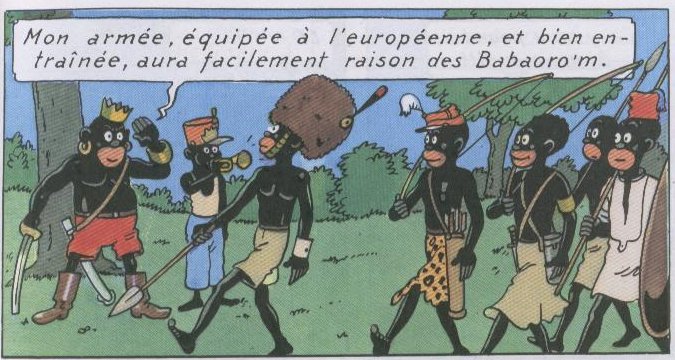
First up, the controversy over Tintin in the Congo's racist caricatures has had one immediate result: sales of the book have skyrocketed. I guess that this means the movie's still a go.


Also, it's not just novels being written and released via gimmicky contests these days. This October, DC comics will launch ZudaComics.com. The site, according to ReadersRead.com, "will feature new and unique content, (and) visitors will have a strong say in which new comics are featured online by voting for their favorites. The winners of the comics competitions will receive commissions to create a year's worth of their web comics for the site, and will have their work published in print formats as well."
At least it's not a reality show.

Harry Potter Experiment Deemed A Failure! Books Fail To Turn Kids Into Readers, Magicians Or Accent-Affecting Anglophiles.


J.K. Rowling's Harry Potter series has been, by all accounts, a failure. Billions of dollars that could have been spent on a rowing team for the Oprah school have been wasted, and for what? Not only did Rowling's books fail to turn bandwagonesque tots into Tolstoy readers, it also reaped nary a single child wizard, witch or broomstick fetishist from the lot of them. I remember when another fey, British lad first came across these waters, and what effect he had on the youth. Morissey's first tour of America had straight kids pretending to be gay, reading Keats and Yeats instead of Kirby and Lee, and dropping their 'r's like Galileo dropped the orange. And who among us can forget the first time witchcraft was explored en masse in the States? Our Salem neighbors to the north drowned, burned and lynched twenty alleged fans of the dark side in an effort to curb that craze. But what effect has the Potter series had on our current culture? The phrase 'bloody hell' has never been more popular among the pre-pubescent, nor has an interest in scarves. Oh, and who hasn't bitten into a robin's egg colored jellybean, only to taste vomit? But in the larger scheme of things, is this any more impressive than the Where's Waldo book boom of the 90's, the 60's hippie peace movement or the taking of thalidomide off of the market whenever the hell it was that they finally did that? Until kids can fly and owls are delivering our mail and the hordes of female Harry fans are burning their scarves and starting chick lit book clubs, the Harry Potter phenomenon remains -- societally, educationally and mystically -- an anti-climactic dud.

Monday, July 16, 2007

News Bits, In Brief

Tintin in the Congo finally feels the heat over its racist...er..."colonial" imagery. It portrays Africans as primates, and they're calling it "colonial"?! I suppose that that's simply spin 101 when Hollywood is hoping to make the Tintin into the next Harry Potter and millions of dollars are potentially at stake.

The Library Journal.com briefly reviewed their visits to the Boston Athenaeum ("a library and cultural center for members and scholars") and the Boston Public Library (a library for the rest of us). The BPL actually gets better marks, but then the Athenaeum only let the reviewer explore the first floor/public area.
Mark my words, dear reader. When the class war finally arrives, I'm hosting torchlight tours of all five floors.

If novels are going to go the way of pop music and be digested primarily digitally, does that mean that writers will soon become like pop stars, whoring themselves out via gimmicky TV contests in an effort to get publisher and audience attention? Apparently so.

Saturday, July 14, 2007

What Makes Sammy Stall?

One of my favorite novels about Hollywood is Budd Schulberg’s What Makes Sammy Run? It's the no-punches-pulled story of an 'amoral hustler' who works his way up the Tinseltown ladder to become the head of a film studio. It's also one of the rare books that I could see having a successful screen adaptation, as Schulberg's acclaimed work as a screenwriter greatly influenced his approach to writing. Apparently, I'm not the only one who feels this way. Over the years, everyone from Frank Sinatra to Ben Stiller has tried to bring Budd's book to the big screen. So what is it that has kept this project languishing in limbo for so long? Ego mostly, and a little fear. Back in the 40's when Sammy was originally published, the majority of the studio heads took personal offense over the material's damning portrayal of them. In an interview with American Legends, Schulberg says, "Sam Goldwyn didn't read the book, but was very hostile toward it. Louie Mayer tried to run me out of town. He hated the book. Mayer told my father he would ruin him for not stopping me from writing the novel." Decades later, little seems to have changed. In The Jewish Daily Forward, Schulberg blames Steven Spielberg for holding things up due to "the novel's negative presentation of studio moguls." Now, I'm just an East Coast kid, but even I know that talking trash about the world's biggest director may not be the best way to revive a stalled production. As Schulberg's fans are always being reminded, though, Budd's never been one to hold his tongue. In fact, it's this same complicated and controversial combination of personal/artistic fearlessness and social/political ignorance that has kept his work so vital.