

 Posts
Posts


 Calvino’s Italian Folktales is now my favorite folktale collection. It is a huge paperback with hundreds of stories in it, which average about two pages each. Calvino collected Italian folktales, sometimes building on previous folktale collectors’ work, and made slight changes - which he makes note of, unlike the Grimms - for continuity or even aesthetics. I would not have noticed the changes myself, as the tales still feel “authentic” to the spirit of the story, while having an elegant simplicity to the language, even in translation! The wonder I find in the stories shares space with a matter-of-fact attitude towards the roughness of life-giving it no more or less attention than it should have - as well as just the right amount of the bizarre to please my tastes. Thanks to these folktales, my imagination is sparked, and my interest in using the phrase “seek my fortune” in daily life is growing. Now to see whether this fortune includes a castle!
This will be Wendell 'Scutopus' Edwards' last book review, as he is heading off to NYC to find fame and fortune. Good luck, Wendell. You -- and your reviews -- will be missed.
Monday, November 30, 2009
Wendell's 30 Book Review:
Italian Folktales by Italo Calvino


Monday, November 23, 2009
Comic Book Review:
Cable & Deadpool by Fabian Nicieza, et al.
Writer Fabian Nicieza's  Cable & Deadpool is a 50 issue 'buddy-movie' starring the Marvel Universe's equivalents of Jesus Christ and Bugs Bunny. It promised loose laughs and even looser sci-fi concepts, yet somehow managed to morph into an affecting ode to fractured friendships and surrogate families.
The plot -- as it was initially pitched -- was simple. Well, sorta. Fast-talking killer-for-hire Deadpool (a.k.a. 'the merc with the mouth') is paired up with time-traveling, soldier from the future, Cable (a.k.a. the son of the X-Men's Cyclops and a clone of Jean Grey). Deadpool wants money. Cable wants to provide the preventative measures required to stop Earth from becoming a war-torn wasteland. You know, your basic run-of-the-mill comedy of opposites with minor Messianic undertones.
Story lines run the gamut, going from blue-skinned cults to hard boiled detective stories to the at-least-it's-dealt-with-quickly Civil War crossover, all while supporting an over-arching plot line partially lifted from the end of Alan Moore's/beginning of Neil Gaiman's run on Miracleman: Cable's creation of island utopia via his many mutant abilities. This is the 'real' story here, the one that you'll find blurbed on the back of the trade paperbacks and in the lead paragraph of the title's Wikipedia entry. And for good reason -- it's good! Nicieza intelligently explores the pros and cons of living under the gentle fist of an all-powerful peacekeeper, all the while using Deadpool's batsh*t crazy blood-lust (and Bea Arthur-inspired loin-lust) as the fail-safe for keeping things unpretentious and unpredictable. Up to issue 42, I was really enjoying the series. The action was exciting, the dialogue irreverent, and the art (almost always) enjoyable. But as a perpetual pruner of my comics collection, I had no intention of holding onto these books when I was done. 'Out with the old, in with expensive, hardcover, classic comics re-prints,' as they say. It's not that there was anything particularly wrong with the series, it's just that, up til that point, there was nothing especially right. Wait, let me re-phrase that. There was a lot 'right.' The jokes alone were worth the price of admission. It's just that nothing had hit me in such a way that I thought, 'You know, I could come back to these books year after year and always find myself emotionally engaged in more ways than giggles.' As corny as it sounds, I want the art I keep around me to be the art that adds to me, that betters me, that reminds me of ideas, ideals and philosophies that I'm prone to lose sight of during my day-to-day living. And up to issue 42, Cable & Deadpool had yet to offer anything in the way of this awkwardly worded request.
Or so I thought.
Here's where I've gotta offer up one of those annoying, all-caps SPOILER ALERT!s. I mean, if you scan the titles of the trade paperbacks, this spoilerific plot point is actually a title-changing event, but some folks are sensitive to this sort of thing. You want a hint? The book goes from being called Cable & Deadpool to Deadpool vs. The Marvel Universe. Did you see what just happened there? SPOILER ALERT! (again!) Cable died. Yes, on the next-to-the-last page of issue 42, Cable sacrifices himself while his Nantucket-like nirvana explodes in a fiery, Photoshop-assisted explosion. From that point on, for the last eight issues of the series, Deadpool is bounced from one guest star to another in a style reminiscent of Buster Keaton's Sherlock Jr. In most corporate comics, this is usually the 'jump the shark' moment, the first glimpse of the shadow of death for any teetering title. Yet somehow (no, not "somehow" -- because of the authorial ingenuity of Fabian Niciez!) it's this extended dying breath of the soon-to-be-canceled comic where things really come together. Having lost the only character in the Marvel Universe who truly believes in him, Deadpool begins to begrudgingly surround himself with a new cast of surrogate sidekicks. They're a motley band of has-beens (Sandi, Outlaw, Agent X) and never-weres (the brilliantly conceived Bob, Agent of Hydra) who, as the last few issues unfold, become a sort of 'workplace family' for our fast-talking antihero. It's this last bit of character building that adds an unexpected gravitas to the series as whole. All of the wacky adventures, pseudo-science, and Christ-like posturing was fun while it lasted, but it's Cable and Deadpool's platonic partnership that now resonates most with the reader. After all, it's only because of the unconditional love and devotion that Cable had shown the oft-undeserving Deadpool that Deadpool is now able to open himself up similarly to others. (Well, he might've been open to a little sumthin'-sumthin' with the aforementioned Bea Arthur, but that was about it.) This is an obvious insight, I know, but it's also one that is nice to have reiterated from time to time. It's especially nice when it's done using a clinically insane comic book character who breaks the fourth wall while wearing boxer shorts emblazoned with his own iconic emblem.
At least, it was for me. And will be again. Cuz I'm hanging on to these.
Wednesday, October 28, 2009
Inkwell Michelle's 30 Second Book Review
 Sweetness at the Bottom of the Pie
by Alan Bradley
When Flavia de Luce knocks An Elementary Study of Chemistry to the floor while scaling the bookshelves of her family’s library, her life is changed forever by a consuming fascination with chemistry. She spends her days on the top floor of the East Wing of Buckshaw, the ancestral home of the de Luces, in a glorious laboratory that once belonged to her eccentric Uncle Tarquin. Nothing gives her more joy than conducting experiments and studying poisons, much to the dismay of her sisters, Ophelia and Daphne. When her father is implicated in the death of a stranger found in their garden, Flavia resolves to use her scientific skills to exonerate him. There’s just one problem…Flavia is eleven years old.
Alan Bradley has crafted one of the most charming sleuths ever. Flavia narrates the story with a voice that is clever, morbid, and hilarious. Opening up Sweetness at the Bottom of the Pie to any page reveals dialog and prose that sparkle vivaciously, just like Flavia!
Thursday, August 13, 2009
Book Review:
I’m a Lebowski, You’re a Lebowski
I remember watching The Big Lebowski in college for the first time. It was such an incredibly odd movie: the climax it seemed to be building towards never came, or showed up in a different guise; I couldn’t tell if it was really dark, or really funny. The more I’ve watched it, the more enjoyment I’ve gleaned from it. Bill Green's I’m a Lebowski, You’re a Lebowski has only enabled my enjoyment of the movie to grow. I can’t claim to be anywhere near as big a fan as the authors are (after all, they started the “Lebowski Fest” phenomenon, which has been gaining in popularity since it began in 2002), though their level of fandom has birthed a fun book.
The book has in-jokes galore; interview with most of the cast, including many extras and small parts; interview with fans of the movie; interviews with the Coen brothers’ acquaintances whose individual stories and personalities were drawn on for the movie; descriptions of Lebowski Fests past; a guide to noticing certain details in the movie; and a spirited attempt to find all the locations for each scene of the film. You don’t have to be as big a fan as the authors are, but the book has the potential to bring you perilously close! Recommended for any fans of the movie.
Review by Wendell "Scutopus" Edwards
Wednesday, July 29, 2009
Book Review:
Sense and Sensibility by J. Austen
I’m fully at the mercy of my Jane Austen fixation now. It started with Persuasion, ramped up with Emma, and is continued by Sense and Sensibility. The latter has all the usual elements of a novel by Austen: a female protagonist; marriage at the end; some sort of impropriety by a character in the protagonist’s immediate social circle; prose which brings grown readers to their knees; and use of the nowadays-rare literary voice “free indirect speech.” Interestingly, I noticed some differences. Sense and Sensibility mentions the servants regularly throughout, unlike the other two novels. Also, it focuses on a pair of sisters, with one of them fulfilling the role of primary protagonist. There is a richness to their sisterhood, and it endears you to both of them, even when one holds a little less sense than the other. In contrast, I found myself under-whelmed by the male characters. The previous books had male characters that impressed, while one in Sense and Sensibility comes off as a bore at first. Another is far too charming, to the point of being suspicious. Both characters eventually show other layers. Still, I didn’t find myself rooting for any of them to end up with the protagonist on account of their personalities; only because of the female character’s own desire did I have allegiances. The protagonist Elinor Dashwood is thought by some scholars to be one of the first literary depictions of a female intellectual. Her consideration of social situations and her pleasure at playing with ideas seem to back this up. To borrow a line from Moreland Perkins’ Reshaping the Sexes in Sense and Sensibility, Elinor is “a talented analyst of human conduct, character, and convention who is equally dedicated to concretely applied reason - although we imagine her functioning this way long before the phrase ‘an intellectual’ was put to its current use.” (Perkins, p.13) To put a personal spin on it, I found myself becoming attracted to Elinor mainly for the above reasons - in the previous two novels I was extraordinarily happy for the protagonists for their eventual fortunes, though I could not share in their husbands’ love. I was endeared towards the protagonists, most certainly, though I didn’t find myself jealous of an Austen character until Elinor was scooped up. I won’t tell you by whom - you’ll just have to find out for yourself. Enjoy!
Reviewed by Wendell 'Scutopus' Edwards
Friday, July 24, 2009
Book Review:
The Little Stranger by Sarah Waters
 Sarah Waters (Fingersmith and The Night Watch) has built a reputation for writing literary gothic stories reminiscent of Henry James and Shirley Jackson. Her talents for creating realistic historical settings and unique characters come to fruition in her newest novel, The Little Stranger.
Post WW2, the Ayres family struggles to hold onto Hundreds Hall, a crumbling English great house that still retains a fading remnant of its glory. Mrs. Ayres clings to her past in an attempt to imagine that the aristocracy still holds power, even as massive social changes sweep postwar England. Her son, Roderick, terribly wounded and scarred from battle, exhausts himself working on the land to try to keep Hundreds solvent. Spinster daughter, Caroline, who is bright and bitter, tries to keep up some semblance of family. Into their Grey Gardens style lives appears Dr. Faraday, who as a young boy visited the great house during a village fête, and became enamored of Hundreds. The Ayres alternately welcome the distraction of the outsider Faraday and then remind him of his humble origins.
Each character is trapped by circumstance and by the house that holds deep secrets. Their lives are bound by a darkness they have yet to comprehend, and the unraveling of their pride, fears, and longings brews up a chilling storm of consequences.
The Little Stranger makes for compelling reading; in addition to featuring nuanced characters and psychological insight, it has a surprise ending that will change your interpretation of all the preceding events.
Reviewed by Inkwell Michelle
Monday, June 29, 2009
Book Review:
Mercier and Camier by Samuel Beckett
 Mercier and Camier was my first reading of Beckett, and it threw me for a loop. I knew he was a well-respected author who played with writing conventions, but I didn’t expect to be as amused as I was, nor did I expect such a literary experience based on two oddball, directionless stragglers. To exaggerate a bit, nothing at all happens in the book in the most glorious way. The two of them are convinced they have a destination or objective, yet they seem to wander about aimlessly. Their banter is the main thing that amuses me; the phrasing used is “off” just enough from what we might actually say, which makes for some head-scratching and chuckling. Just one example of many is when Camier asks, “Do you feel like singing?” and Mercier replies, “Not to my knowledge.” What? I chuckled, and then wondered what possibly could cause Mercier not to know whether he feels like singing. Little absurdities tucked away throughout the text draw the reader in, and yet give one pause to think about any possible deeper levels they may imply. Whether or not more meaning actually lies in waiting is another matter, and feels like part of the exploration the reader goes on. In that sense, we as readers/observers may have more direction than Mercier and Camier.
Some darker themes arise (likely due to main characters’ vagabond natures): futility, violence, illness – mental and physical, lewdness, drunkenness, rudeness, and a few others which escape me. Interestingly, these don’t bog down the story for me, nor do they make it too difficult a read. There are some books where I can barely read the text due to the rough subject matter. Only one or two passages in Mercier and Camier come anywhere near making me want to stop reading; however the episodic nature of the book keeps the pace moving which makes the scenes all the more fleeting.
I found it interesting I felt barely attached to the characters; usually it’s important to me that the author cares for the characters in some way, leading me to care. It’s not entirely clear to me in Mercier and Camier how Beckett may care for them, though the style of writing he employs and his non-traditional approach to the story may preclude the need for care of characters. He makes us complicit in the unraveling of the story, and allows us to see things from the narrator’s perspective (sometimes sarcastic and even acerbic) while rarely focusing on the characters’ perspective. I like feeling like I’m in league with Beckett, watching things happen. It may seem odd to say after all this that, while these two characters do exist in their own little world, their world is firmly entrenched in ours, with all the ethical and moral obligations intact. Their rejection of our world and their unwitting creation of their very own is one of many reasons why this book interested me. Their rejection of the usual social mores does not distance them from the reader any more than the narrator wishes, which I like; I wouldn’t want to feel totally removed from main characters.
I’ve enjoyed all the big words Beckett employs, which force the reader to refer to a dictionary for elucidation (even if I didn’t devote myself to looking up every one). These polysyllabic words give the characters a mad professor type of feel to them, which has a delicious tension with how absurd their banter and actions are.
While not an easy or even straightforward book, Mercier and Camier is a rewarding meander. And it’s brief—a novella—which makes it well worth the Beckett-curious reader’s time.
Review by Wendell "Scutopus" Edwards
Wednesday, June 17, 2009
Comic Book Review:
Runaways Vol. 3 #10
 This is a comic with scope. Not epic, trans-continental, War & Peace-y scope, but emotional scope. It goes from funny to sad and back to funny again in less than two dozen pages, and there's not a single false note or misstep along the way.
The story itself is simple. Eight year old Molly Hayes (a.k.a. Princess Powerful, although she's the only one who refers to herself this way) is taking a tour of Xavier's new School for Gifted Youngsters, and she's been assigned Wolverine as her tour guide. While this sort of 'comedy of opposites' set-up usually begins to feel monotonous after the second gag, writer Chris Yost keeps things interesting by allowing some melancholy to seep into the story. For those who don't know, the premise of the Runaways series is that a group of super-powered kids found out that their parents were one of the world's most diabolical groups of super-villains, and decided to try and stop them. This went far less smoothly than the kids would've liked, resulting in the deaths of all their parents. So now they're on the run from, well, pretty much everyone, as the good guys think they're murderers, and the bad guys want revenge for the stuff their parents once did. But while the older Runaways have come to terms with their parents' evil alter egos, young Molly is having a much harder time accepting the dichotomy of loving parents who were also cold-blooded murderers. It's this made-for-metaphor conundrum that gives the issue its emotional resonance, making it succeed as both an Abbot & Costello-style comedy and an I-can't-believe-I'm getting-choked-up-by-Wolverine's-dialogue character piece. As for Sara Pichelli's art, it's spot-on: clean, cartoony, and easy to navigate. Not only that, but Pichelli possesses that seemingly rare ability to draw kids that actually look like kids, and not like adults with bigger heads and (marginally) smaller breasts.
I'd give this issue of Runaways to any young girl on the fence about superhero comics, as well as any older, ex-comics fan who grew tired of comics' grim and gritty cliches. I mean, hell, who doesn't want to see the X-Men's Danger Room used to create a unicorn and butterflies?
Note: Runaways vol. 3 #10 is a self-contained, stand-alone story. That means you get the complete story -- beginning, middle and end -- in this one issue. Not only that, but there's a bonus, 11 page back-up story, too. Hmn...if I didn't know better, I'd almost think Marvel was courting new readers.
Friday, June 12, 2009
Inkwell Michelle's 30 Second Book Review
Twenty Fragments of a Ravenous Youth
by Xiaolu Guo In search of something more than a monotonous existence, seventeen year old Fenfang leaves her family and their provincial way of life for the seething city of Beijing. There, she tries to satisfy her insatiable hunger with instant noodles, Western literature, hot coffee, and movies, but her resigned acceptance and blank face fail to cover her longing and vulnerability. Finally, after four lost years, Fenfeng begins to feel like her life has begun. She’s twenty-one, has found work as a movie extra, and believes this will be the catalyst for great changes in her life.
The story is told in twenty brief chapters brimming with deadpan humor and shining with Fenfeng’s resiliency amidst squalor and failed relationships. Xiaolu Guo writes short, sharp prose that captures the hard edge of youthful angst. Her infectious novel is written with an authentic and idiosyncratic voice that brings to mind the way Holden Caulfield spoke to disaffected youth. With a fierce honesty, Twenty Fragments of a Ravenous Youth will transfix and transport you as Fenfeng comes of age and finds her place.
An excerpt:
“My youth began when I was twenty-one. At least, that’s when I decided it began. That was when I started to think that all those shiny things in life—some of them might possibly be for me. If you think twenty-one sounds a bit late for youth to start, just think about the average Chinese peasant, who leaps straight from childhood to middle age with nothing in between. If I was going to miss out on anything, it was middle age. Be young or die. That was my plan.”
Wednesday, June 3, 2009
Comic Book Review:
Likewise by Ariel Schrag
 The fourth chapter/third book in Ariel Schrag's 'High School Chronicles,' Likewise details not only Schrag's senior year at Berkeley High, but also the aftermath of her parents' divorce, her search for a "scientific" explanation for her homosexuality, her continued heartbreak over her boy-crazy ex-girlfriend, her do-or-die devotion to her comics, and her self-image as it relates to her appearance and intelligence. That Schrag is able to do all of this with a wit and wisdom that makes her constant contradictions completely credible is quite an accomplishment.
So why couldn't Likewise have come out before Dash Shaw's Bottomless Belly Button and Alison Bechdel's Fun Home? If it had, it would've been so much easier to sell. I mean, how many NPR-listening, casual comics readers do you think are gonna go for a third cartoonist's coming-of-age magnum opus in just as many years? What makes this even worse is that -- in my opinion -- Likewise is the best of the bunch.
Covering a lot of the same terrain as BBB (parents' divorce, lingering heartbreak, complicated sibling dynamics) and Fun Home (gay teens, sexual politics, questioning one's identity, art as a life raft), Likewise manages to surpass both by blending the strengths of each while simultaneously skirting their weaknesses.
Lemme break that last line down a little.
To me, Fun Home's sole shortcoming was its almost complete lack of comics magic. There are so many storytelling devices unique to comics, it seemed a waste of the artform for Bechdel to stick to a basic picture-describes-words/words-describe-picture template. You can open up to any page in Fun Home and see what I mean. In its 240 pages, I can count only a handful of instances where the illustrations actually add anything to the narration (or visa-versa). While Bechdel's words do an amazing job of expressing her emotions and experiences, I can't help but feel that Fun Home would've been just as effective as a 50 page prose story. Contrasting this, Likewise could've only been a comic book.
I had the opposite problem with Bottomless Belly Button. Shaw clearly has a mastery of/fascination with the many possibilities of a comics page. Open up BBB to almost any page and you're sure to be wowed by his technical trickery. But the story itself? Pretty predictable. Part of it, I think, is the fact that Shaw was attempting to tell a highly emotional story while having never experienced any of those emotions himself. That's not to say that a writer needs to have lived everything they write about, but if you're making up a story from scratch, you'd better have one helluva an empathetic imagination. Shaw, at least in BBB, does not. The tale he tells contains zero surprise details or up-til-then unidentified emotional nuances. It's almost as though he was attempting to re-tell a divorce-themed family drama he'd seen on TV or heard from a friend of a friend. It never feels authentic. Likewise, on the other hand, is so much weirder, so much messier, so much more full of insightful observation and -- I don't know -- realness?
(Quick side-thought: I've always felt that making a comic is a lot like making a movie. You've got the screenwriter/writer, the cinematographer/artist, and the actors/the manner in which the characters are drawn. In movies, these positions are filled by anywhere from three to three hundred people. In comics like the ones being discussed here, they're all done by one. Expecting one person to do all of these jobs to perfection may be asking a lot, but that's what the combination writer/artist has volunteered to do. To keep this questionable logic going a little longer, I'd say that Shaw excels as a director and special effects coordinator, Bechdel as a screenwriter, actor and cinematographer, and Schrag as all five.)
With Likewise, Schrag has crafted a comic that is as structurally daring as it is emotionally affecting. Every time she plays with panel layouts or switches art styles or f**ks up her fonts, she is intentionally entrancing the reader with an explicit expressionistic effect. Sometimes it's giddy, drunken glee, sometimes it's the harrowing disorientation of a recurring heartbreak, but there's always an extra layer of emotional imbalance being added.  If I had to criticize Schrag for anything, it would be her aping of James Joyce in the narration. While it works most of the time, there are moments when it reads almost like a slam poetry parody of Ulysses. Much more effective is her ear for dialog. Nearly every word bubble echos one's own memories of high school -- the good, the bad, and the ugly.
It's the rare autobiographical work that doesn't make me at least occasionally question the author's authenticity, but three books in, and I've yet to doubt a single detail in Ariel's art. Maybe it's the fact that she admits to keeping extensive files on her friends and family, or maybe it's the way that she continually shows herself jotting down conversations in a notebook, or maybe, just maybe, it's that one panel on page 100 where, in the middle of having a "freak-out," she pauses to remind herself to use it in the comic. Yeah, that's probably it.
I've only ever read one interview with Schrag. Still, thanks to her comics, I feel like I've come to know her. She's funny, smart, fragile, self-centered, manipulated and manipulative, undeniably endearing and, ultimately, awe-inspiring. I'd rank her high school books up there with the autobiographical work of Eddie Campbell and Harvey Pekar, with Likewise standing shoulder to shoulder with Pekar's Our Cancer Year and Campbell's Alec: The King Canute Crowd. It's DEFINITELY RECOMMENDED.
See Also:
Ariel Schrag's website
TimeOut's awkward, panel-by-panel, two page preview
More sample pages, this time from the folks at National Public Radio
Noah Berlatsky's interview with Schrag (This is what pushed me to finally buy her books!)
Thursday, May 28, 2009
30 Second Book Review
Road Dogs
by Elmore Leonard Elmore Leonard is back, and he's brought three of his most popular characters with him. Out of Sight's super-cool criminal, Jack Foley, LaBrava's not-so-cool criminal, Cundo Rey, and Riding The Rap's wishy-washy psychic, Dawn Navarro, all return in this, the second most blatant Hollywood cash-in in Leonard's otherwise outstanding career. While not as lifeless as 1998's Get Shorty sequel, Be Cool, Road Dogs is nowhere near the effortless masterpiece that the aforementioned Out of Sight, LaBrava and Riding the Rap were. Why? Well, to me, Leonard's best moments are often those where nothing happens plot-wise and the characters are allowed to just riff endlessly. Unfortunately, this is the first of his books where it actually feels like nothing's happening and that the characters are riffing endlessly. Oh well, it's not like this is going to be Leonard's last book. The man has over 40 novels to his name. And it's not like this is a sign that his talent has left him, either. Leonard's last book, 2007's Up In Honey's Room, was one of his best yet.
One line pull-quote: Curious fans of the Jack Foley character might want to wait for the inevitable movie version.
Related: Today Is Elmore Leonard Day (I Hope You Remembered To Wear Your Gun)
Monday, May 18, 2009
Inkwell Michelle's 30 Second Book Review
 The Last Dickens
by Matthew Pearl
Pearl plunges the reader into the world of 1870, skillfully blending historical fact and literary fiction into a riveting tale about Charles Dickens’ unfinished last novel, The Mystery of Edwin Drood.
Drawing on original letters and newspapers, Pearl recounts the extraordinary celebrity of Dickens during his speaking tour of America, at a time when hundreds would line up overnight, enduring freezing temperatures in the hopes of obtaining tickets to his sold out shows.
The mystery begins when the seedy underworld of the opium trade washes ashore in Boston Harbor with tragic results. Daniel Sands, a young apprentice for publisher Fields, Osgood, & Co., is killed while on an errand to pick up the coveted manuscript of Dickens’ last serial installment of Drood.
Daniel’s mentor, James Osgood (of the aforementioned Fields, Osgood, & Co.) is disbelieving of the police’s insinuation that Daniel was involved with opium. In an effort to unravel the mystery, Osgood and Daniel’s sister Rebecca set sail for London to investigate the recently deceased Dickens’ papers. They hope the answers to Daniel’s death might lie in the missing ending to Drood.
Intelligent and fun, The Last Dickens is chock full of insights into the history of publishing, the politics of opium, and the trials and triumphs of literary genius.
Pearl has garnered acclaim for his previous books, The Dante Club and The Poe Shadow. His well-researched literary mysteries are thoroughly enjoyable, and particularly appealing to avid readers. They are literally literary. His titles say it all.
Monday, April 27, 2009
Inkwell Michelle's 30 Second Book Review
What Angels Fear
by C.S. Harris Signet With a great eye for period detail, and the ability to create a cast of charming, clever characters, C.S. Harris delivers a perfect historical mystery. Sebastian St. Cyr, a former soldier and a gentleman, is forced into hiding when his dueling pistol is found at the scene of a murder. He becomes the prime suspect in the brutal slaying of an actress who had suspicious political connections. St. Cyr discovers that he can’t even trust his family, and so he dons multiple disguises as he traverses the streets and alleyways of London on a dangerous quest to clear his name. With insight and humor, Harris gives us a story filled with the most classic themes: deception, love, betrayal, friendship, and honor. What Angels Fear is a fantastic start to Harris’s Regency mystery series featuring the beguiling St. Cyr.
Thursday, April 23, 2009
Comic Book Review:
Gus & His Gang by Christophe Blain
 French cartoonist Christophe Blain approaches the Western genre in much the same way as the chapbooks of old. His stories are short, exciting, melodramas full of bank robbers and beautiful women (and occasionally, bank robbers who are beautiful women).* But where the chapbooks downplayed the chit-chat in favor of the action scenes, Blain does the opposite. The bank heists, train robberies, and poker games in Gus are often brief, four or five panel affairs, while the title character's inept attempts at wooing can easily eat up four or five pages. Normally, this might imply an artist's unease with action, but with Blain, this is clearly not the case. He's one of those rare, Kirby-esque cartoonists whose every brush stroke packs a punch. So why would Blain even bother to write a Western if he was only going to use the genre as a Christmas tree with which to hang his brightly colored characters and vivid, engaging, and above all, hilarious dialogue? For the same reason that novelists like Elmore Leonard and film directors like Howard Hawks did: because it's fun.
Let's back up a second, back to my comment about Blain's 'Kirby-esque' art. What I'm referring to here is not an aping of the King's aesthetic, but a kinship in the kinetic energy that each of these artists is able to summon through their work. Like Kirby, Blain's art is quick. It moves quick, it reads quick, and it often feels like it was drawn quick. If you took out the color and the word bubbles, it could easily be mistaken for thumbnail sketches. But by keeping this loose approach, Blain is able to give his work a 'pop' often missing in the 'cleaner' lined comics.** You find yourself visually surfing the squiggly, swirling curves of Blain's lines instead of staring stiffly at the page. Blain's modern day, American equivalent might be Paul Pope (no surprise, considering how strongly Pope was influenced by French comics), although where Pope approaches his work as Capital-A Art, Blain's cartooning feels more like the madcap lunacy of the original MAD magazine crew.
In a world where academia and the Academy Awards have turned most Westerns into stoic examinations of 'Man's relationship to Nature' or 'Man's inhumanity to Man,' it's sorta refreshing to read one where the overriding theme is 'Boy + Girl.' Or, to put it in a pull-quote: In Christophe Blain's Old West, the cowboys spend the majority of their time getting struck by arrows. Not Indian arrows, but Cupid's.
*I wanted to throw the word "intelligent" in here, too, but I didn't want to seem like I was trying too hard to sell the work as an Old West story featuring new millennium sensibilities. The fact is, the women in this story are mostly girlfriends, daughters, and wives. The three main characters are Gus and his gang, and so everyone else we meet is -- to some extent -- defined by their relationships to them. That said, as the story progresses, Gus & His Gang actually becomes more about Clem (one of Gus' two-man 'gang') and his complicated relationships with his wife (Ava), his daughter (Jamie), and his mistress (Isabella). Abbreviated solo stories and quiet, stolen moments do an amazingly economic job of fleshing out Ava and Isabella, to the point where the reader knows their motivations and inner workings as well as, if not better than, the male leads'. I can only speak for myself here, but a week after reading it, it's 'Clem & his girls' who still linger loudest in my head.
**To keep my Kirby comparison going a li'l longer, compare a page of Jack's pencils to its final, inked incarnation. Kirby enthusiasts aren't exaggerating when they complain that most of the King's inkers unintentionally sapped some of the life out of his work.
To sample seven pages, click here.
30 Second Book Review:
In The Woods by Tana French
 Irish author Tana French has written an engrossing debut novel that is both a police procedural and a psychological thriller. It's about a team of detectives - Cassie Maddox and Rob Ryan - attempting to solve the murders of two children committed twenty years apart. But there's a twist. Ryan was the lone survivor in the original case, and he is still haunted by the experience. Not only that, Maddox is the only one who knows her partner's secret, and it's drawing her in dangerously close to the case. Set in contemporary Ireland, In the Woods is an intelligent, exciting story with a well crafted plot.
Reviewed by: Kay
Thursday, April 16, 2009
Book Review:
The Good Thief by Hannah Tinti
 The Good Thief is a rare find, a feat of imagination that thrills and captivates the reader from the very first chapter. Set in Colonial New England, the unsettled and unlikely cast of heroes faces squalor and hard luck with a curious mix of deadpan humor and hope. Tinti tells a gripping tale about a one-handed orphan boy named Ren and his search to unravel the mystery of his past. The answer might lie with the charismatic and enigmatic con man, Benjamin Nab, who adopts twelve-year-old Ren from St. Anthony’s orphanage. Nab introduces Ren to a shadowy world of thieves, grave robbers, and mercenaries. A quirky household forms around Ren and Benjamin: Tom – an incurably drunk teacher, Mrs. Sands – who lets them stay for a night then can’t get rid of them, a dwarf - who lives on the roof and sneaks in at night by descending the chimney, and Dolly – a hired killer who was buried alive. Ren glues these strangers together in his humble desperation for a family, and he is the catalyst that cracks the hardened hearts of the adults around him who have been broken and scarred.
It’s not just the wonderful characters and plot that make The Good Thief a novel to treasure, it’s the talent and insight that Tinti exhibits with her assured writing style. From the very first paragraph, the reader is a willing accomplice to the story. Tinti writes with a precise pen, using words with care – lavishly when Benjamin is in his tall-tale telling mode, and sparingly when a scene is sentimental:
“Is that what you wanted to hear?”
“No.”
The man reached over, took hold of the lantern, and blew it out. Night enveloped the barn.
“Well,” he said at last to the darkness between them, “that’s when you know it’s the truth.”
The irrepressible Ren lodges in your heart with his mix of world weary acceptance and yearning hopefulness. His search for his place in the world reveals the most basic of human needs: the desire to love and be loved.
Reviewed by Michelle.
For two more staff reviews of this same book, click here.
To read Flavorwire's interview with Tinti, click here.
Wednesday, March 25, 2009
Inkwell Michelle's 30 Second Book Review
 Booked to Die
by John Dunning
Finely drawn characters and good hardboiled dialogue propel this mystery to the top of the stack. Denver homicide detective, Cliff Janeway, finds himself on the wrong side of the law when his nemesis and all-around bad guy, Jackie Newton, forces Cliff to action in the name of justice. Cliff is an anomaly among his fellow detectives…he collects rare books, and eventually owns his own antiquarian bookshop. The lore about the collectible book trade is fascinating. Dunning, who owned an antiquarian shop, is the perfect tour guide into the realm of the passionate, unscrupulous, and quirky book collectors and dealers. This one will make you wish for a first edition!
Monday, March 16, 2009
Comic Book Review:
Silver Surfer: Requiem by Straczynski & Ribic
 Since the Silver Surfer's inception in 1966, the character has been an outlet for countless authors' overwrought, over-written, middle-aged angst. But is it any wonder why? Unlike most of Marvel's menagerie, the Silver Surfer isn't a fast-talking teenager or a testosterone fueled he-man. He's an intellectual alien prone to alliterate elegies and impassioned pleas for peace. If you're a corporate comics writer with a flash drive full of unpublished poetry, you couldn't ask for a better mouthpiece!
Silver Surfer: Requiem by J.M. Straczynski & Esad Ribic continues this tradition. It's a four-issue funeral parlor farewell, complete with purple prose. The plot is simple: The Silver Surfer is dying, and has only one month to live. Ever the emotional E.T., he decides to spend his last 30 days re-visiting the people and places he loved most. If that sounds to you like a set-up for a series of somber guest-star appearances, you're right!
The first issue features the Fantastic Four, which is fitting, as theirs was the first comic book that the Silver Surfer appeared in. Straczynski does a nice job writing the FF here. Their dialogue and interactions are completely character based, reminding me of the original Kirby & Lee comics. The Thing and Johnny Storm's bickering is spot on (i.e. it's actually funny, and feels natural instead of forced), and Sue Storm is given a small moment of silent tenderness that'll break your heart. It's been a long time since a guest-spot has made me want to read more of the guest-stars' comics, but this book had me placing an order for the Fantastic Four Omnibus Vol. 2 as soon as I was finished. And in this world of synergistic sales, isn't that what guest spots are really all about? Issue two is told from Spider-Man's perspective. Beginning with a goofy battle with a giant robot and ending with a solemn rooftop eulogy, this issue sees the Surfer finally connecting with Earth's inhabitants after 40-some-odd years (real time, not Marvel Comics time) of disconnect. Now, I know that this is sacrilege, but I've never been much of a Spider-Man fan. That said, I found his inclusion here to be inspired. Straczynski keeps all of the smart-alecy one-liners that the character is known for, but tweaks them, using them less as punchlines than as the sort of uncomfortable joking one resorts to when confronted with tragedy. It's a nice touch.
Oh, and as an added plus, this is the issue where we finally find out why the Silver Surfer rides a surfboard -- and the reason is pure, pothead poetry.
The third issue begins with a brief visit from the master of the mystical arts, Dr. Strange. ("Dr. Richards called me because...well, because doctors always consult other doctors when they find themselves at the end of a diagnosis they can't beat.") The doctor is there to say goodbye to the Surfer and to give him a magic flame. ("It is divided into two parts. That which existed before you came, and that which was created after [...] you saved our world from extinction. The fire of that knowledge will merge with you, will always be a part of you. [...] This way, you will always know what you preserved...and what was created through your kindness.") After thanking the Doc, the Silver Surfer takes off into outer space, headed home to the planet and the woman he was forced to leave years ago. But as this is only issue three of four, the Surfer is inevitably delayed en route -- this time by a religious war raging between two neighboring planets. Thus begins a brief, sci-fi side-story with obvious allegory a-plenty. In Straczynski's defense, I think that this mini-story's main goal isn't to preach, but to further illustrate Dr. Strange's "That which existed before you came, and that which was created after" line quoted above. Is it a touch heavy handed? You bet it is. But a touch heavy handed is what Silver Surfer fans have come to expect. It's as much a part of the character as the shiny, silver skin and the pupil-less, Orphan Annie eyes. Hell, even Stan Lee refers to his cosmic creation as "the most soliloquizing superhero of them all," and Stan is no stranger to heavy handed soliloquizing! The fourth and final issue is narrated by The Watcher. It begins with an unconscious Silver Surfer lying sprawled out on his board, soaring through space. When he finally awakens, he finds that he is on his home planet, Zenn-La. Confined to a Kubrickian hospital bed with his beloved Shalla-Bal standing beside him, the Surfer becomes the star attraction of his own living wake. Citizens from all over Zenn-La stream past to thank the man that "saved them, their children, and their children's children." Even Galactus -- the giant, God-like, planet eater responsible for the Silver Surfer's life of solitude -- makes an appearance. I won't spoil the purpose of Galactus' visit, or what it means for the fate of the Silver Surfer and the people of Zenn-La. Suffice it to say, it provides the sort of ending that fits perfectly with what came before, yet was impossible to anticipate.
For better and for worse, SS:R's artist, Esad Ribic, is clearly of the 'Alex Ross school' of painted comic book art. In the book's few action scenes, this is a bit of a hindrance, as the characters tend to look static and slightly dull. Fortunately, there are only two such scenes. The rest of the time, Ribic's painted approach serves to enhance the intended solemnity of the piece. His autumnal palette keeps things sufficiently somber, and he makes outer space look infinite and isolating all at once. Ribic's best 'trick' is his portrayal of the Surfer. He gives the character very little visible emotion, yet by using repeated close-ups, we as the readers are forced to transfer whatever emotion we are feeling onto the character's mirror-like face.
Reading Silver Surfer: Requiem, I was repeatedly reminded of two other comics:
1. Dave Gibbons and Alan Moore's Watchmen #4 (a.k.a. The Dr. Manhattan issue)
In both SS:R and W#4, the lead characters have reached the end of their respective stays on Earth and are ready to move on. But where Dr. Manhattan's seeming omnipotence leaves him feeling largely removed from Earth's inhabitants, the Surfer's seeming omnipotence only expands his empathy. Another thing that struck me as similar was the way that both writers chose to accentuate the 'otherness' of their lead characters by using what could be called 'cold' or 'sterile' dialogue. While I know that this is a genre trope, both Moore and Straczynski managed to elevate it beyond mere cliché, transforming clunky and clinical terminology into something strangely beautiful.
2. Frank Quitely and Grant Morrison's All Star Superman
This one even more so. You have two alien superheroes dealing with their impending deaths. Superman has twelve days(?), the Silver Surfer has a month. Both are physically deteriorating, yet spiritually strong. Their last acts are to say goodbye to a who's who of funnybook friends, while working to ensure these friends' future safety. Both series' basic structures are also the same; each issue is a self-contained story, with all of these stories combining to tell one over-arching tale. And the endings! (WARNING: EXTREME SPOILERS AHEAD!) At the end of both series, both heroes become celestial light sources -- Superman becomes a part of/the heart of Earth's sun, and the Silver Surfer is transformed into a star.
Don't get me wrong. I'm not suggesting that Silver Surfer: Requiem is equal to either All Star Superman or Watchmen. Those two comics are gold medal classics, the work of insanely talented writers and artists at the top of their game. But I will say this: SS:R is one of the few corporate comics in recent memory which attempted to achieve something similarly artistic. All things considered, a silver medal seems totally apt.
Thursday, March 5, 2009
Inkwell Michelle's 30 Second Book Review
The King’s English: Adventures of an Independent Bookseller
by Betsy Burton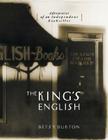 This book is sure to delight the kind of person who can’t pass by a bookstore without stopping to browse. The King’s English is the name of an independent bookstore owned by Betsy Burton. Although subtitled “Adventures of an independent bookseller,” it goes far beyond the business of selling books. Betsy’s intrepid spirit sparkles in this funny and thoughtful memoir of a life surrounded and inspired by books. Her passion for literature is contagious. The reading lists at the back of the book are worth more than the price of the whole book!
Thursday, February 26, 2009
Inkwell Michelle's 30 Second Book Review
Mistress of the Art of Death
by Ariana Franklin Become immersed in the scandal and intrigue of Henry II’s England by means of Ariana Franklin’s well-researched historical mystery. Outsider Dr. Vesuvia Adelia Rachel Ortese Aguilar of Salerno is hired in secret by King Henry II to investigate the murders of several children in Cambridge which threaten to become a political nightmare. Adelia’s plight as an educated, independent woman in a repressive society is handled with delicacy, unlike so many historical novels that imbue the characters with modern sensibilities. Adelia is a winning creation - intelligent, prickly, and truly alive on the pages. Mistress of the Art of Death is certain to appeal to fans of Ellis Peters’ Brother Cadfael mysteries.
